



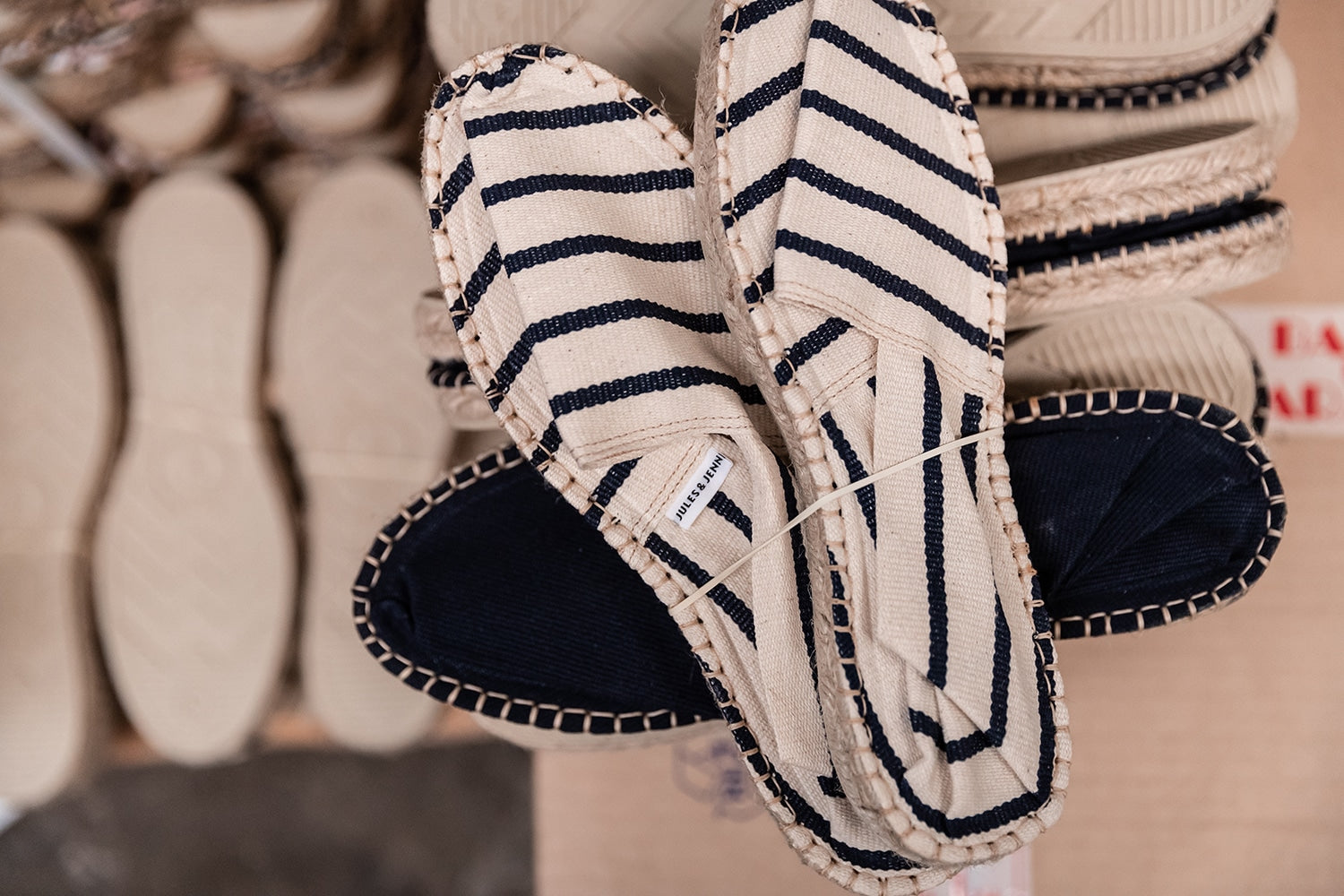
The espadrille manufacturing workshop, France (Mauléon)
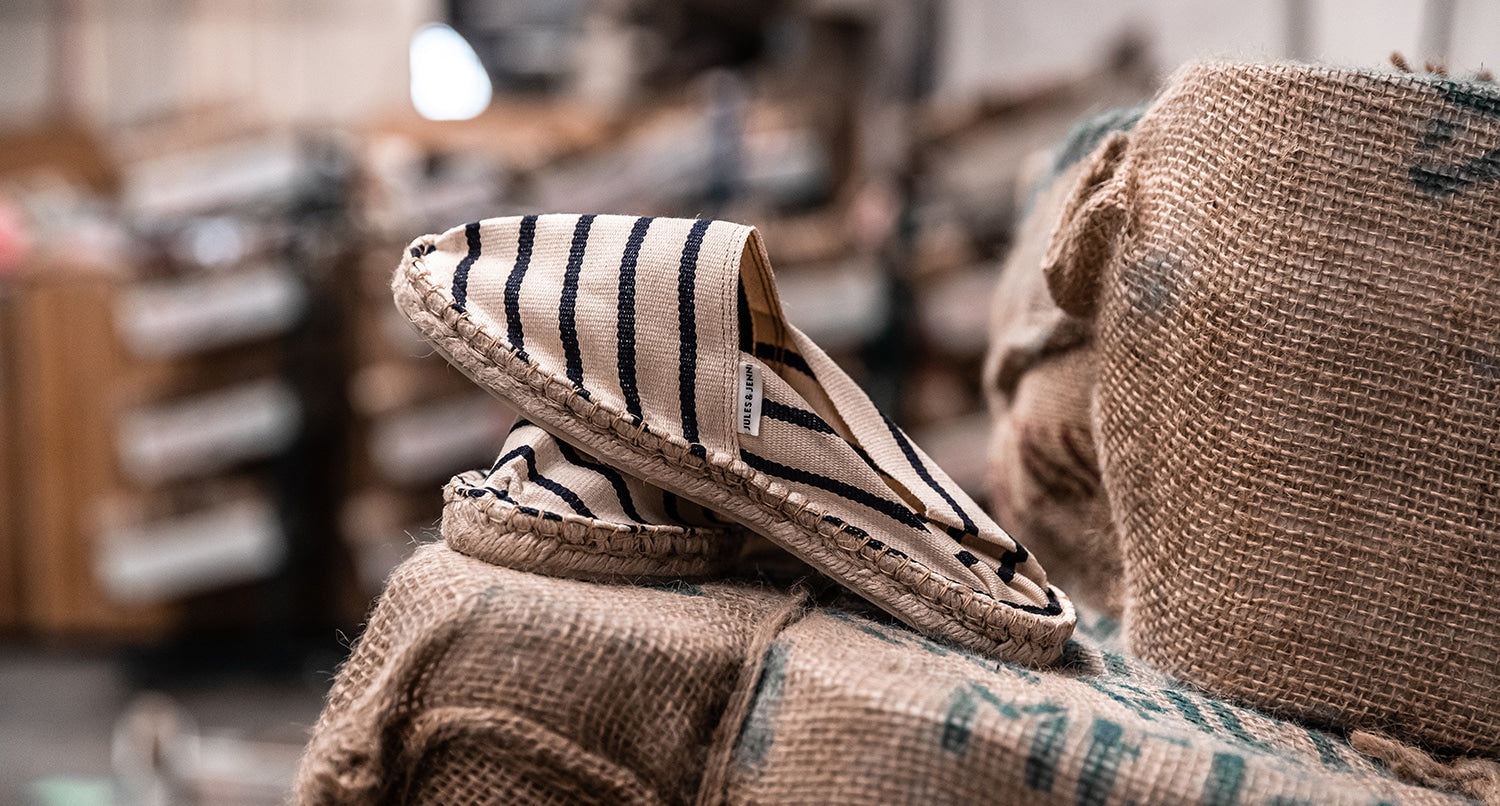
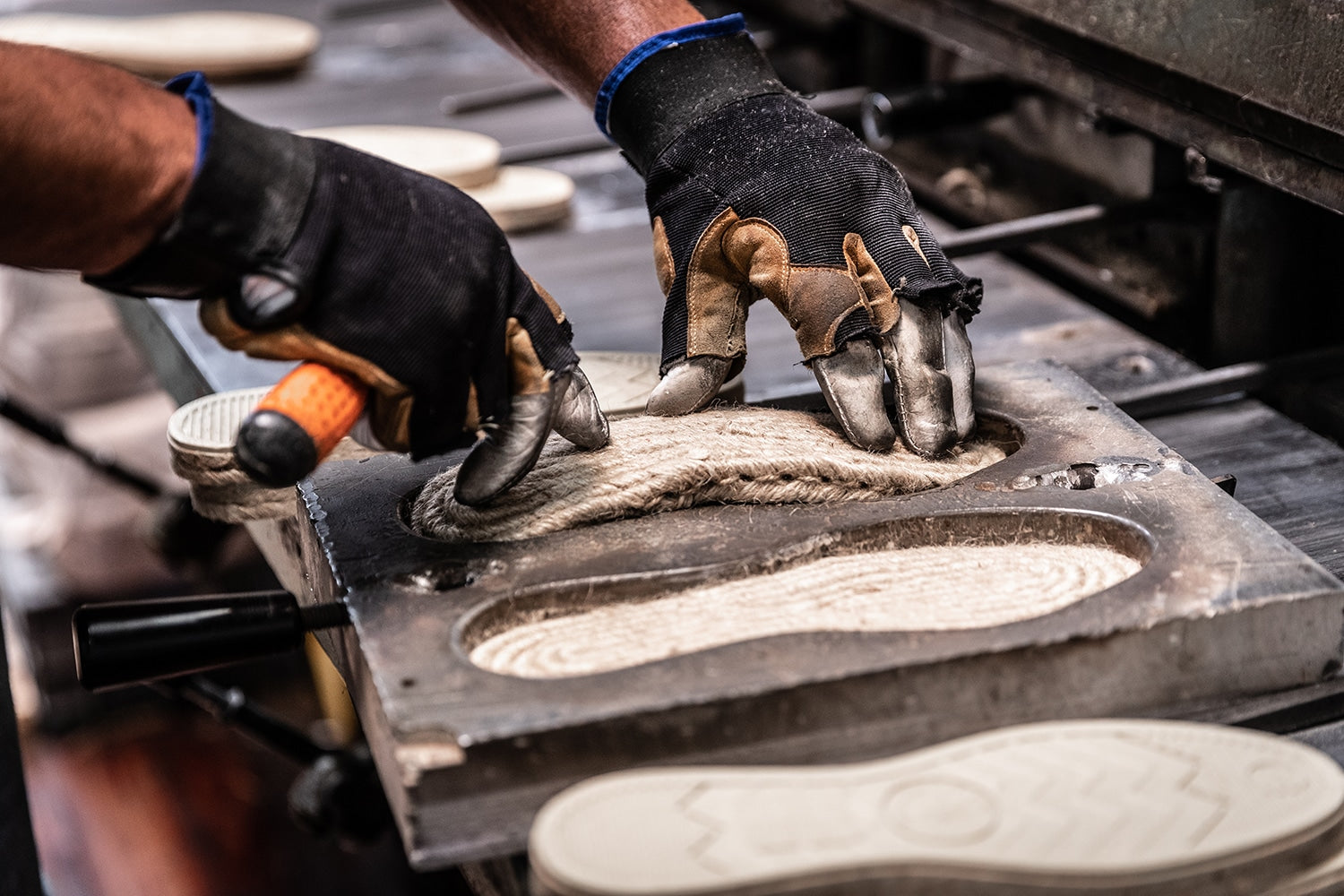
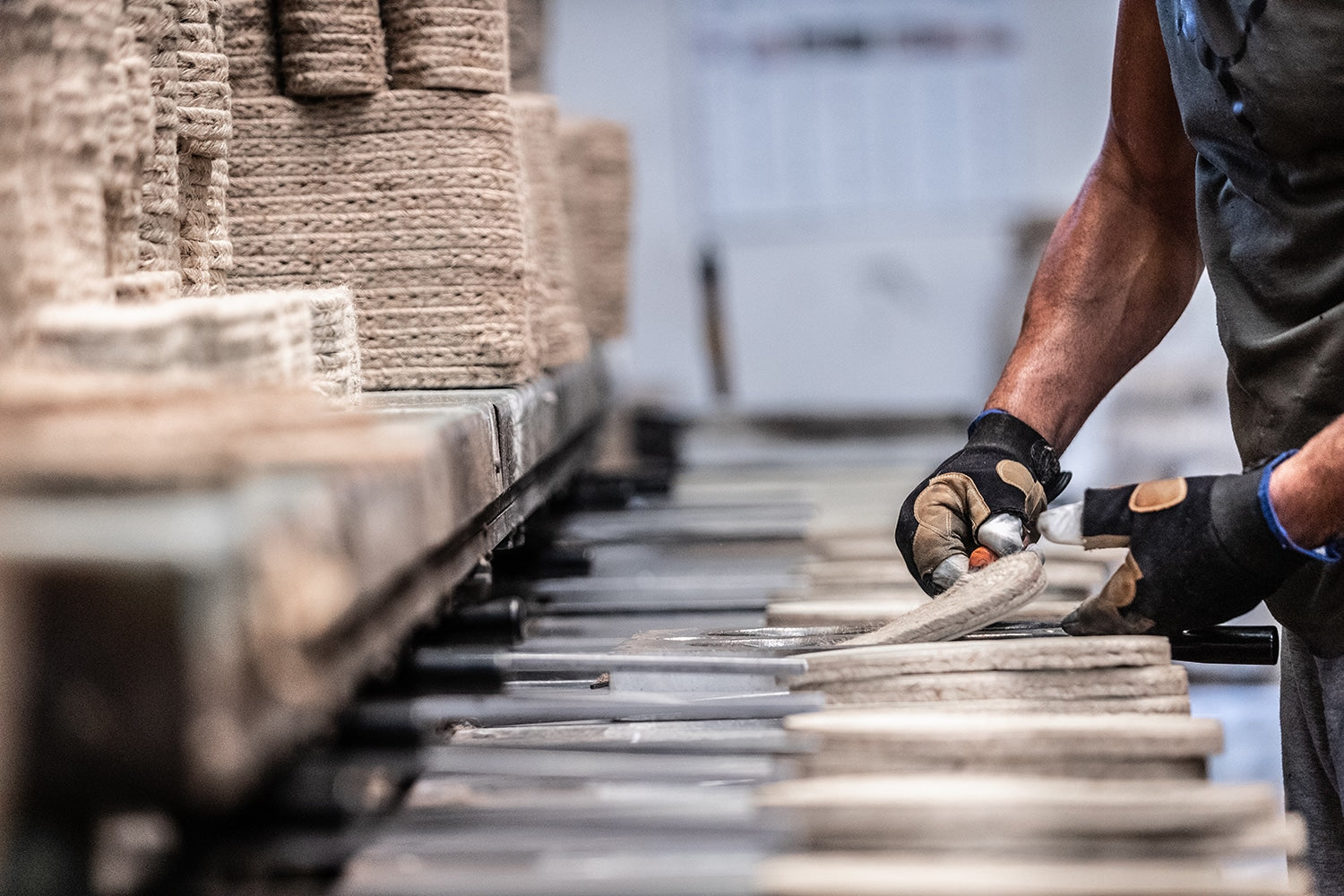
Appearing in the 18th century, the espadrille was originally made of a braided sole made of jute or hemp rope and fabric. The latter, usually linen, covered the upper of the shoe. Today, the sole is made of jute and latex, and the upper is made of cotton canvas.

The workshop and JULES & JENN
Traditionally made in the Basque Country and Béarn by artisans specializing in hemp and linen, espadrille making is now part of Basque heritage. It was in this region that we sought out and found the small family workshop that carefully crafts JULES & JENN espadrilles.
Still working with some of the machines purchased by his grandfather, the workshop owner is a real character. Resolutely more focused on making the product than marketing it, the owner conveys his passion for his craft through a few exchanges. A few months of trial work convinced us that this workshop would be the ideal partner for making our espadrilles.

Shoe making
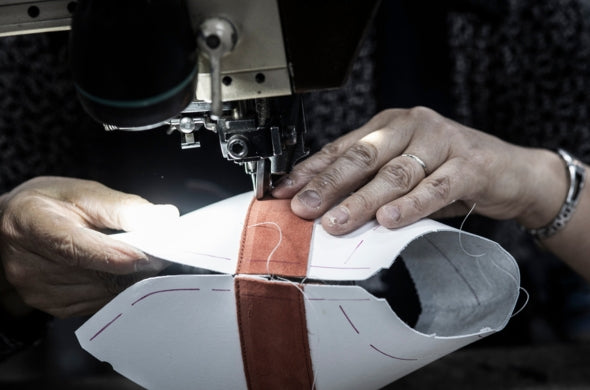
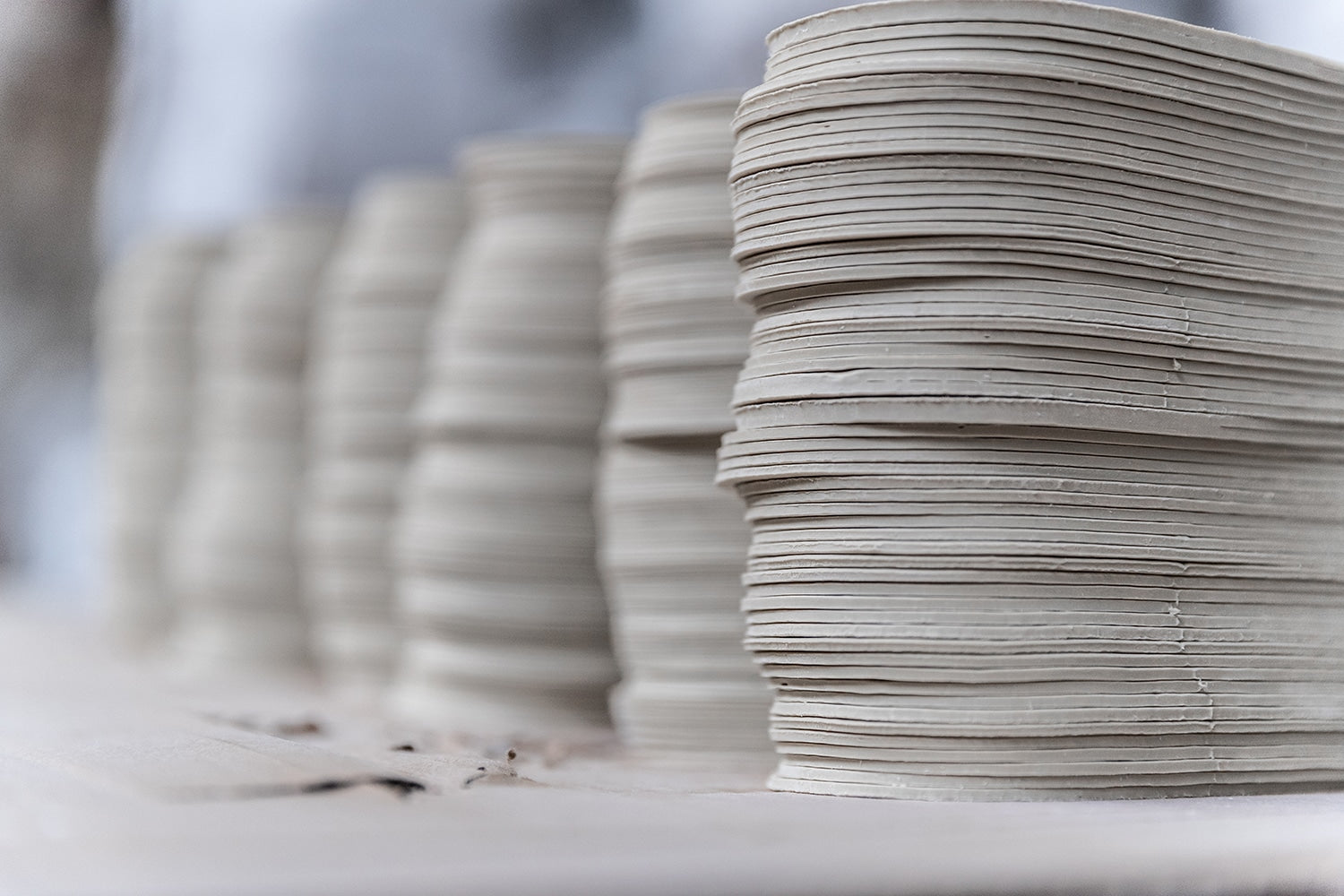
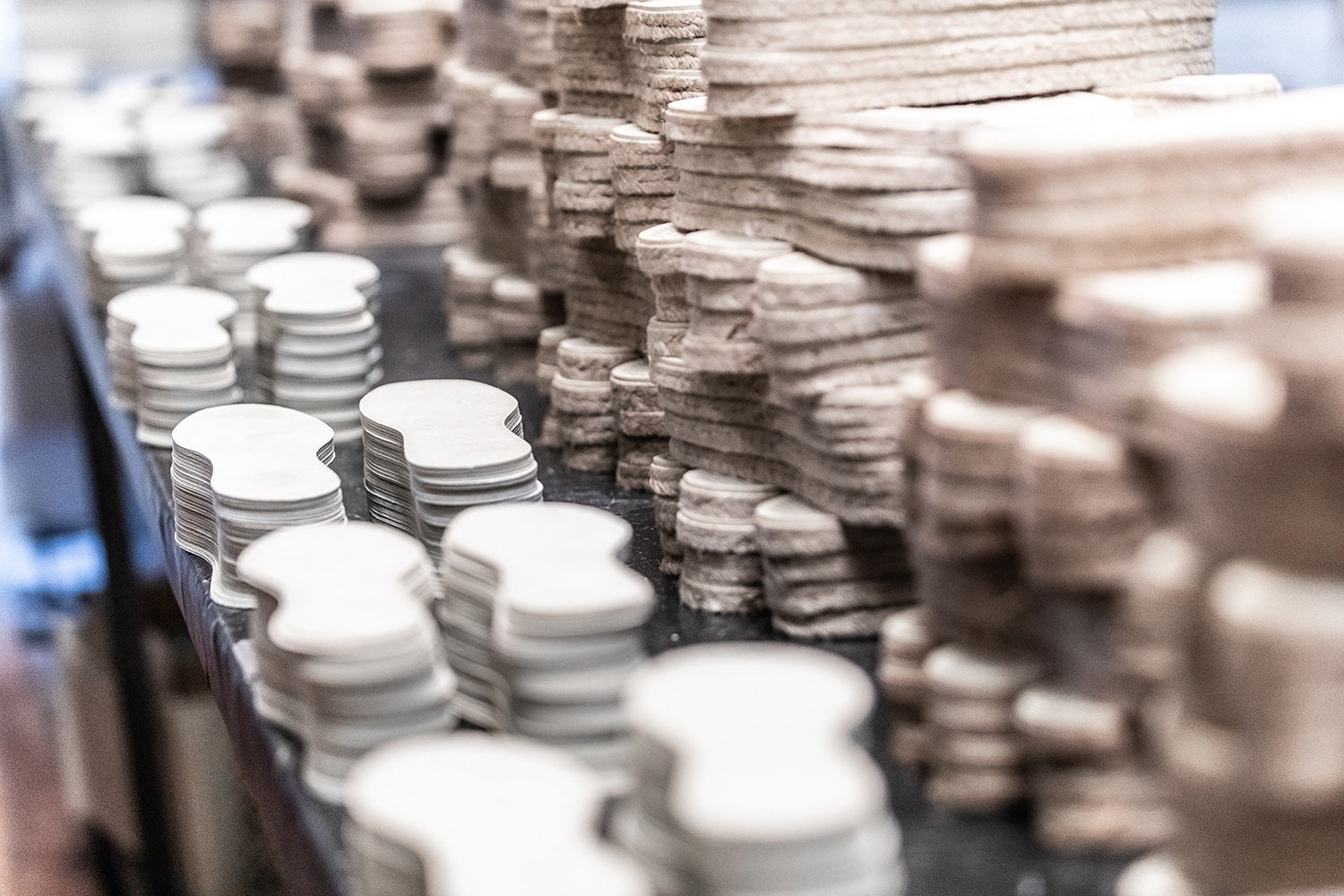
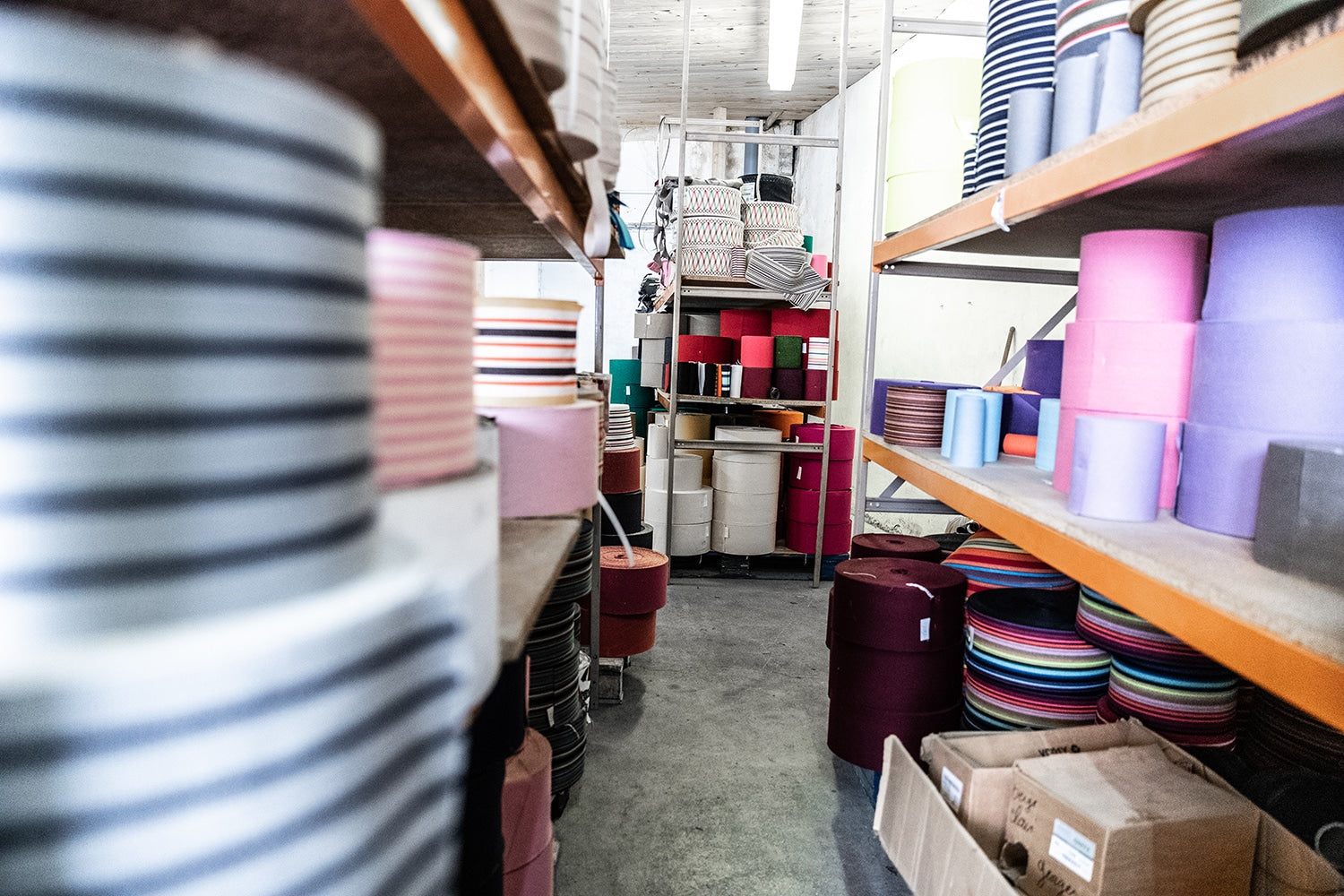
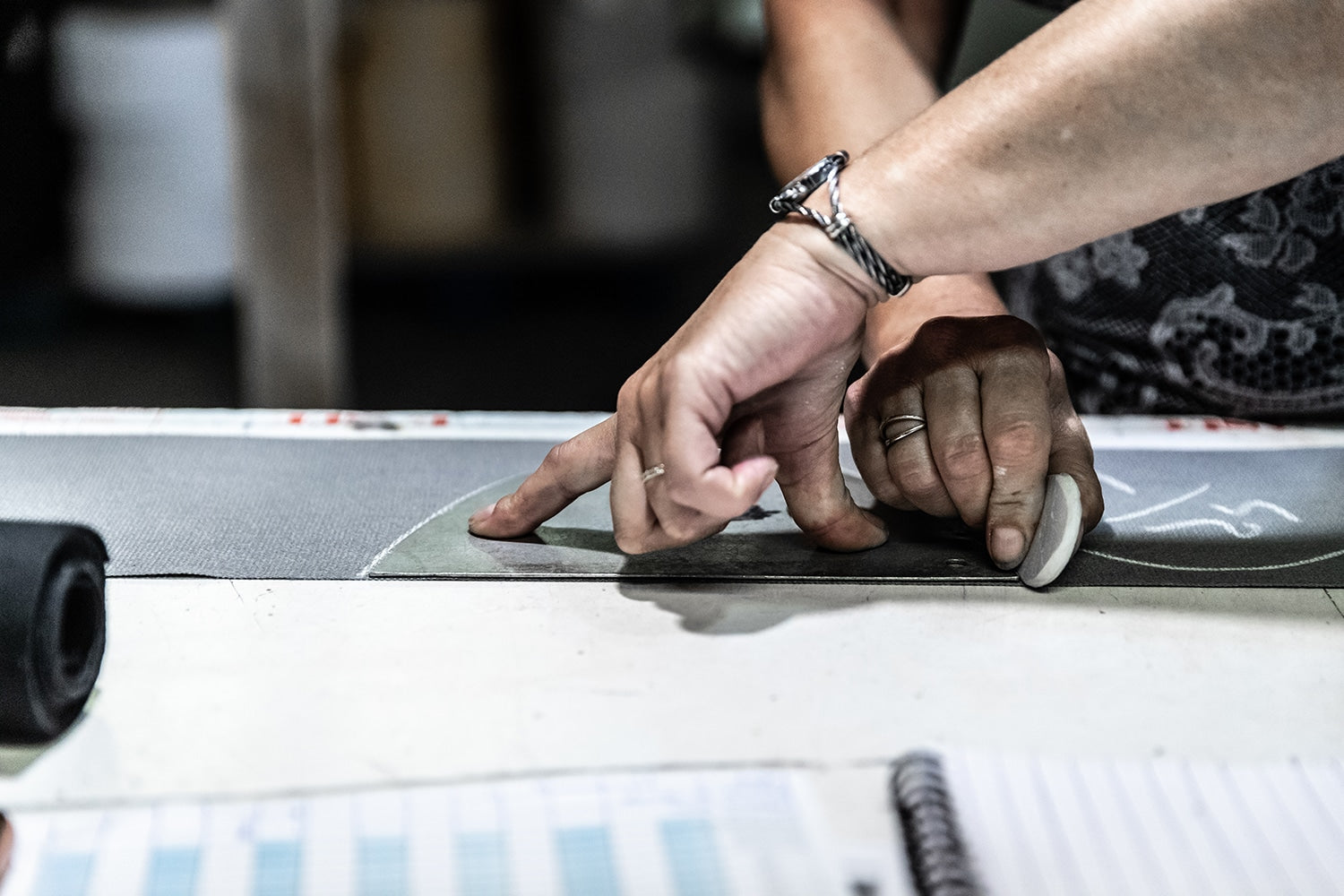
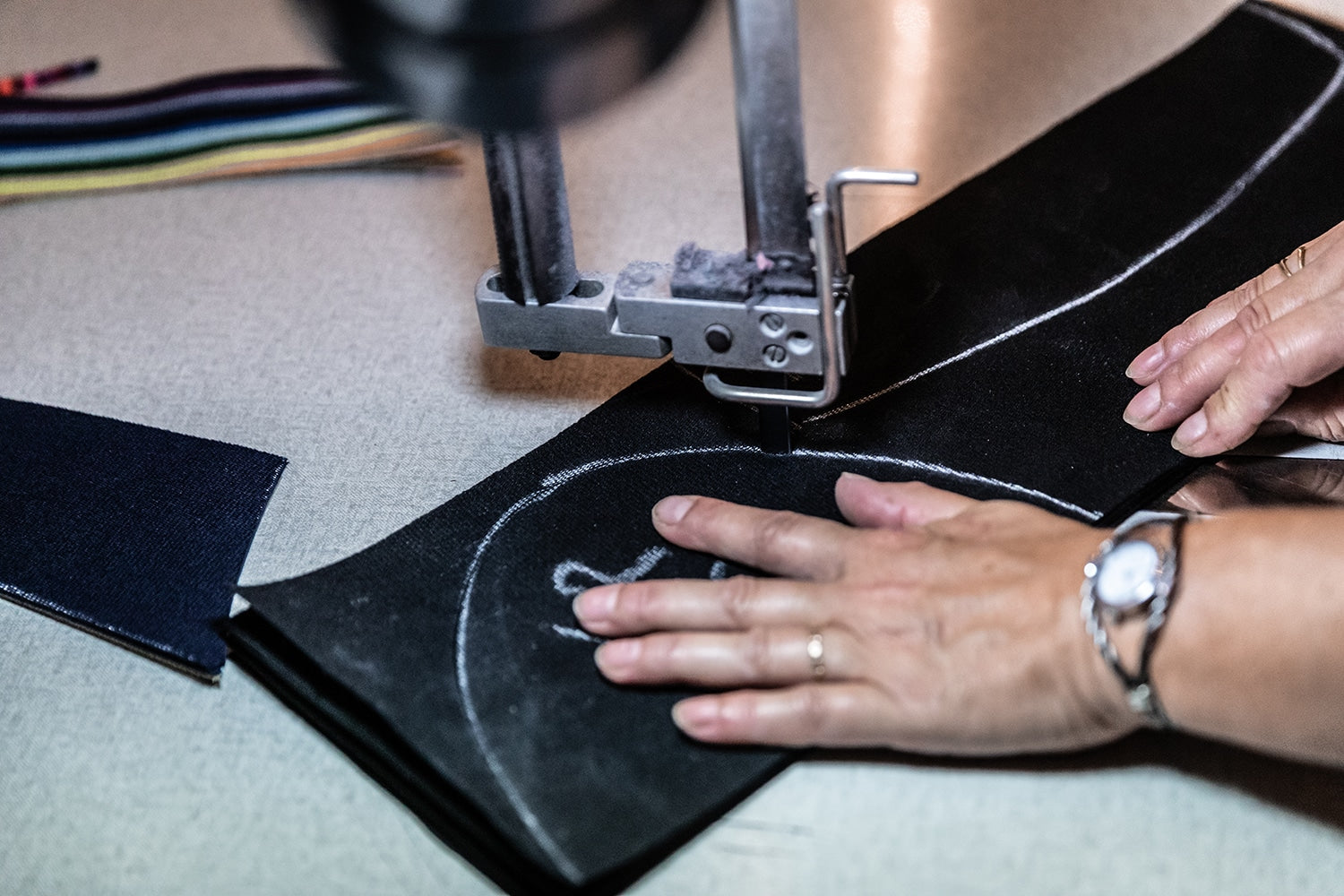
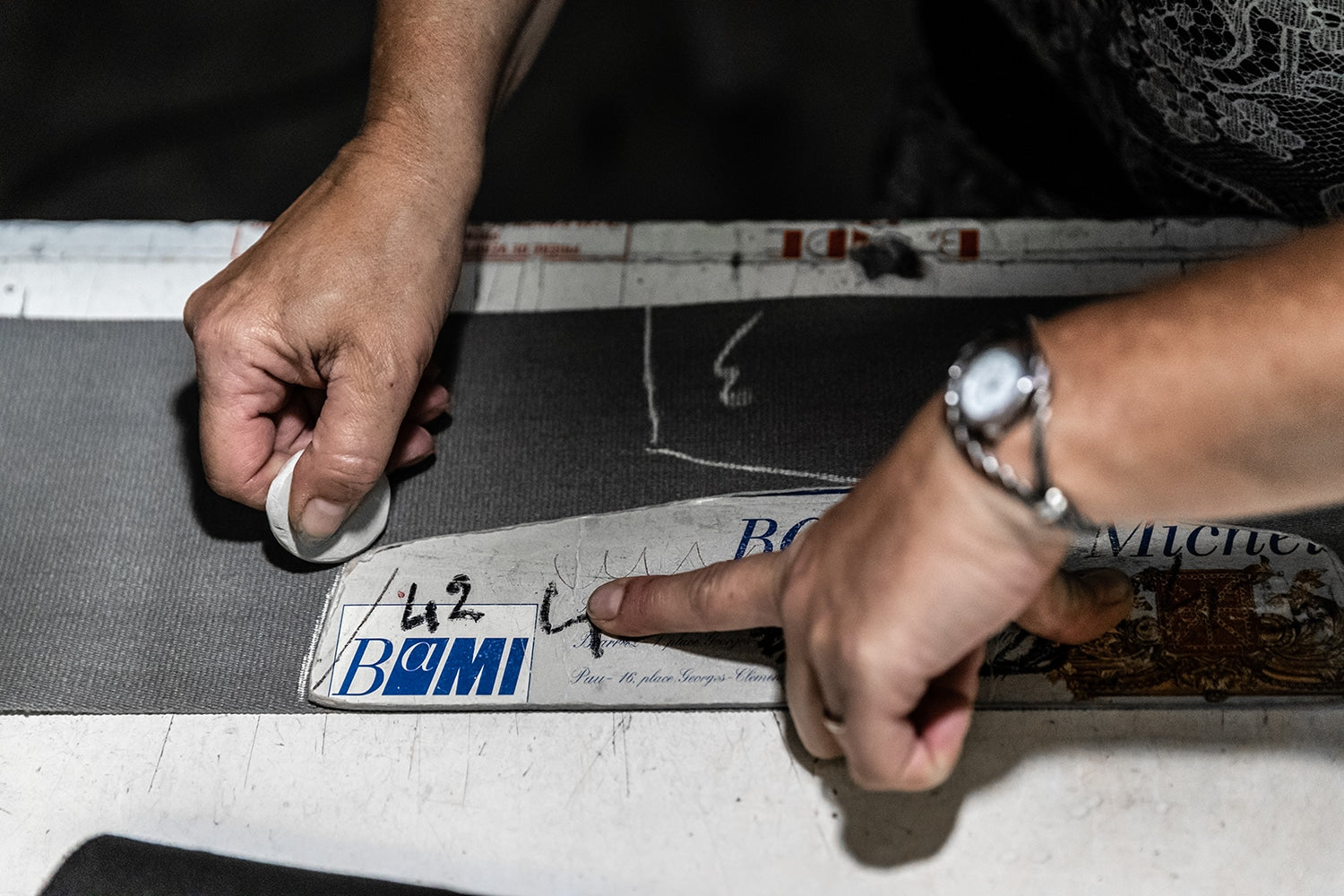
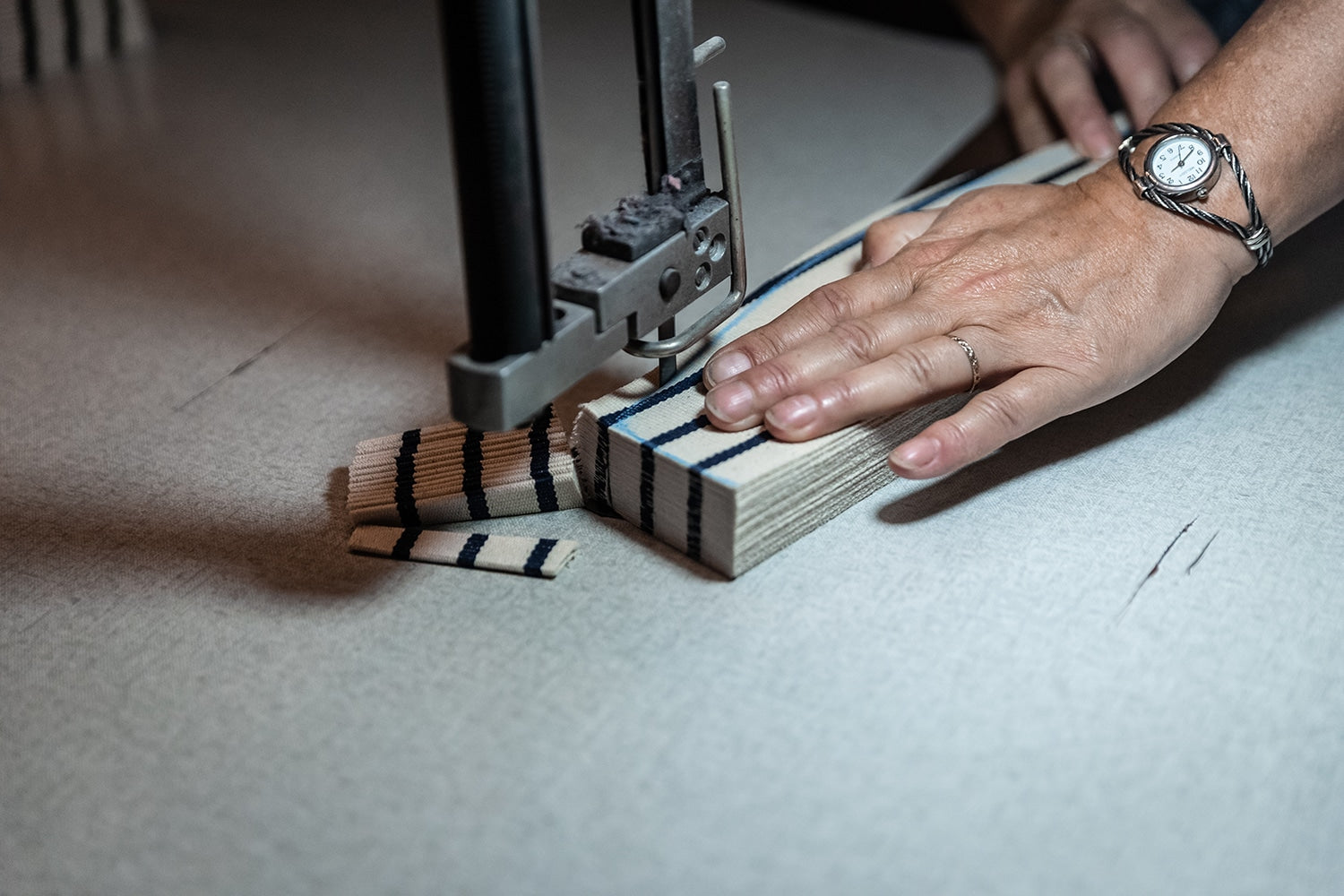
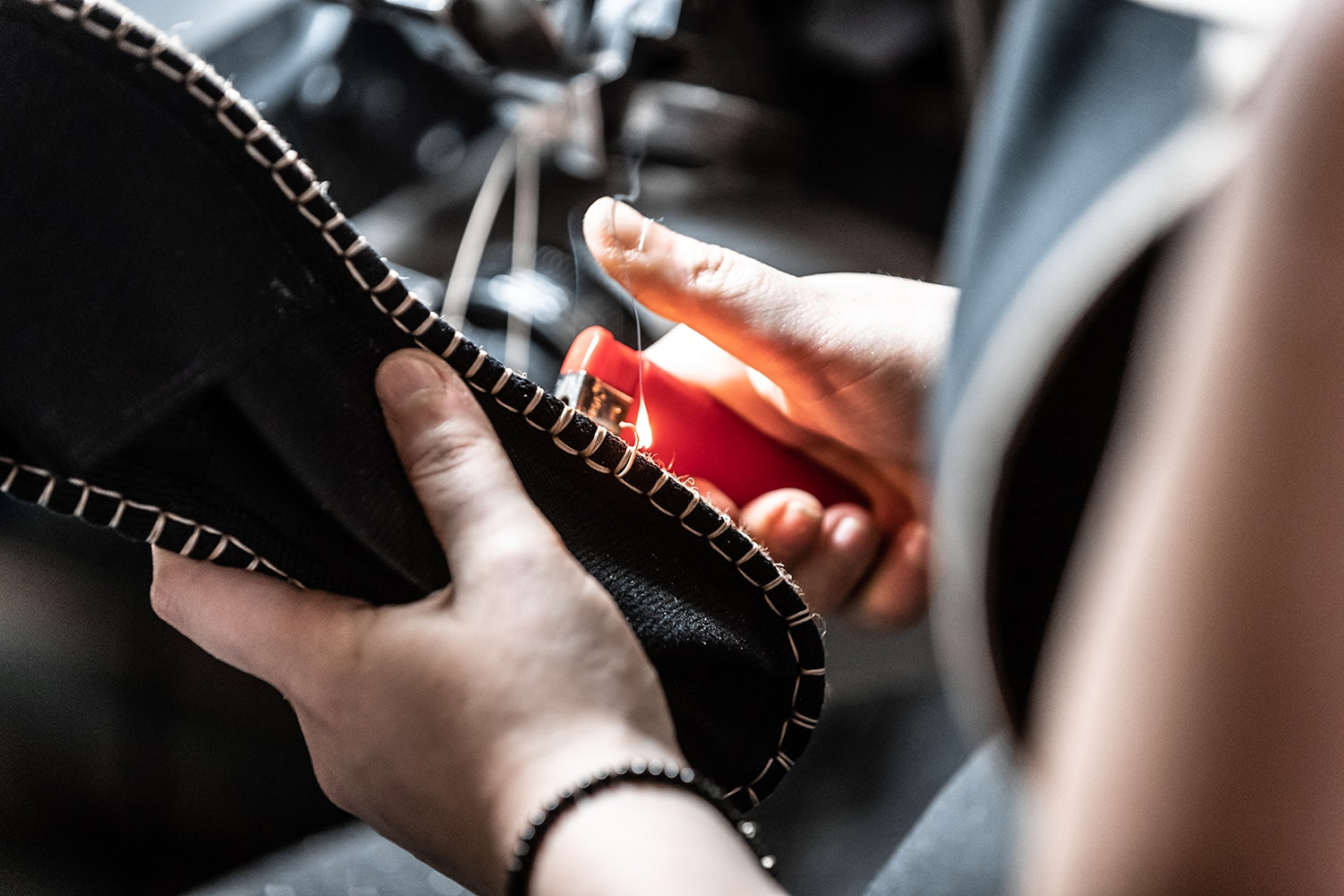
Following a well-established pattern, each piece of fabric is cut using a band saw. Depending on the style of the fabric, the placement of the patterns or stripes is a meticulous step for the aesthetic rendering of the espadrilles. After cutting, the two pieces of fabric, one for the front of the foot and the other for the heel, are stitched together. The sole arrives already assembled by the workshop: the jute surrounds the latex base. After gluing the sole, the fabric is assembled onto the sole. The Italian-style edge stitching gives the espadrille its characteristic traditional finish.
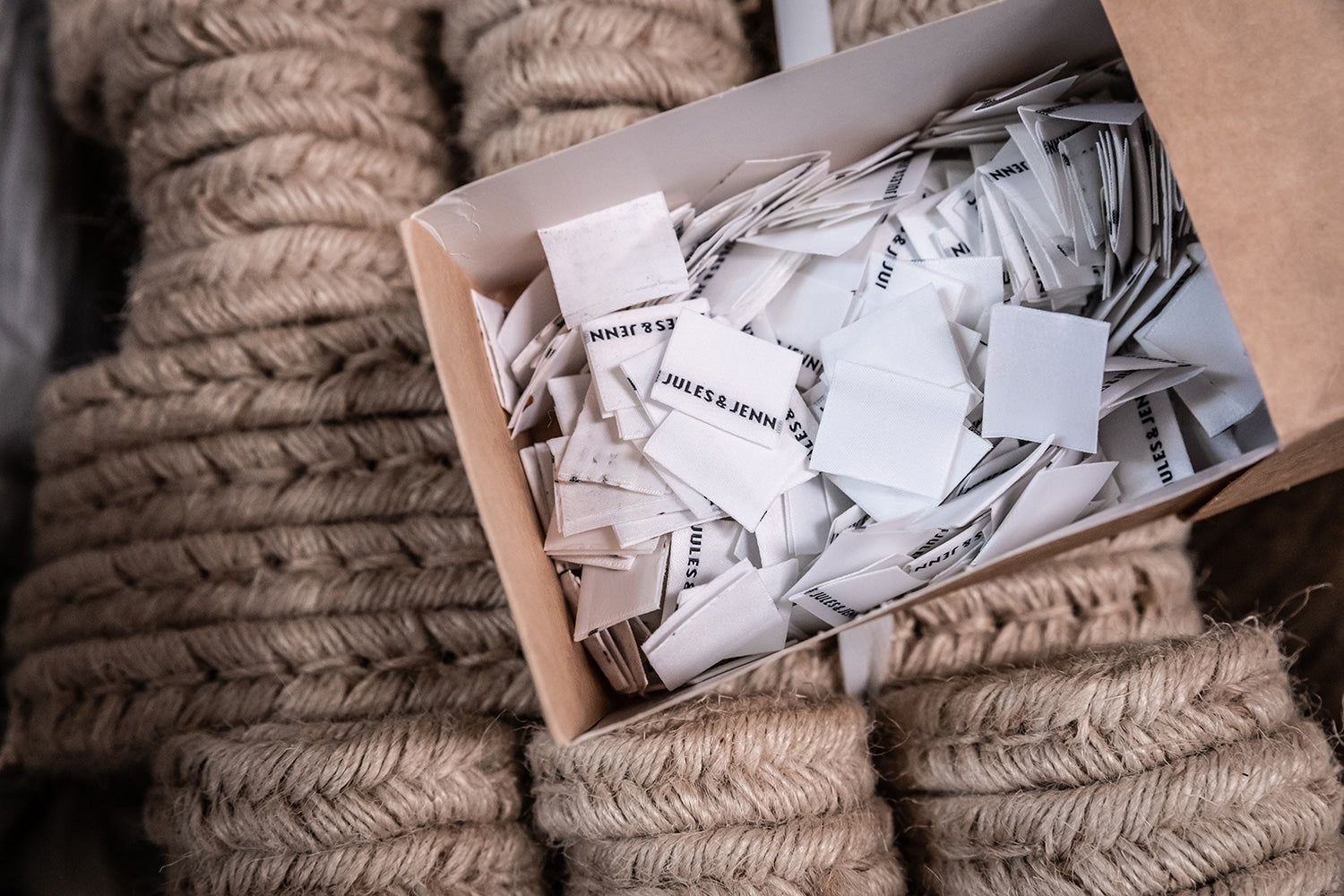
Finally, the espadrille is pampered to eliminate any remaining imperfections. Slipped into its JULES & JENN pouch made from GOTS-certified organic cotton, the espadrille is ready to meet you and stroll at your feet.
At a collection point from €25
Available in 3X, 4X
100 days to try
Email, phone