Vegetable tanning: an art in itself

Vegetable tanning to enhance the uniqueness of leather
Tanning is a process that transforms animal hides into durable leather. Two different techniques can be used: mineral tanning, which uses chemicals such as chromium salts, and vegetable tanning, which uses plant substances such as quebracho bark.
Focus on vegetable tanning, a more traditional method, used to make JULES & JENN belts.
What is leather vegetable tanning ?
Vegetable tanning is an ancient artisanal tradition. At our belt leather supplier, this tannery located in the town of Santa Croce, on the banks of the Arno River in northern Italy, this tradition continues. It has been passed down from father to son for centuries. The quality of the resulting leather is based on a skillful blend of ancient recipes and cutting-edge technologies.
The transformation of raw hides into a durable, unalterable material takes place inside wooden drums. It's a slow process, based on the use of powders concentrated in natural tannins - extracted from oak or mimosa - combined with modern machine technology. Thanks to the use of modern drums, the tanning process has been reduced from one year to one month, depending on the desired result. A considerable time saving!
Vegetable tanned leather, a unique material
The signs of aging reveal the true nature of leather. The colors of the tannin give the leather a warm tone, becoming increasingly brighter over time. Like a fine wine, vegetable-tanned leather matures over time, absorbing the traces of life. However, this natural aging does not compromise the leather's strength; quite the opposite: the resulting leather is harder and much less supple than mineral-tanned leather. Each vegetable-tanned hide is therefore unique.
Vegetable tanning respects the environment
Vegetable tanning is a process inspired by nature and respects the environment. Vegetable-tanned leather does not contains any toxic substances harmful to humans. The use of natural tannins for leather processing ensures a low environmental impact. Another advantage of vegetable tanning is that it allows the finished product to be recycled, just like other leathers.
Vegetable tanning and mineral tanning
Mineral tanning accounts for 85% of global production. This tanning process is less expensive because the tanning process takes less time. The transformation of a hide into leather can be observed in a few days using chromium salts, whereas it takes 30 days to tan leather with vegetable-based substances. Above all, mineral tanning produces more supple leathers and offers a much wider range of colors than vegetable tanning, which is limited to natural and dark colors. The choice of tanning method therefore depends on the desired objective and the type of leather you need to make your products. This is why vegetable-tanned leather cannot be used to make soft products or pastel colors.


The choice of vegetable tanned leather at JULES & JENN
At JULES & JENN, we have chosen to make your belts from vegetable-tanned leather, because the rigidity and strength of this leather allow you to achieve a modern style with ease. The particularities of vegetable-tanned leather – thicker, more resistant, and increasingly shiny over time – ensure a certain guarantee of quality for durable belts… and responsible thanks to its process with very low impact on the environment and our health!


Focus on JULES & JENN belts in vegetable leather
The belt manufacturing workshop
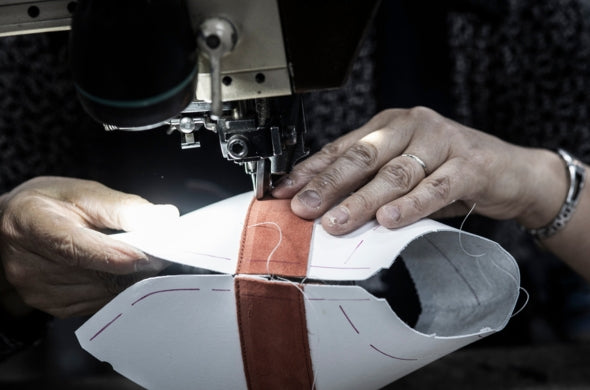
Located near Castres, in the heart of the Tarn countryside, this small belt-making workshop has long worked for major names in French and international fashion. It's precisely this artisanal tradition that we were looking for in JULES & JENN belts. Indeed, with this seemingly simple-to-make product, the experience in handling materials and achieving impeccable finishes makes all the difference.
The making of the belt
A confident and brisk movement must guide the cutting of the belt leather. Using a punch, the cutter makes the holes with precision and to the millimeter. In addition to gluing or saddle stitching, numerous finishing touches are applied to the edges of the belts to give them a perfect appearance: sanding, heating, trimming, threading, and edge dyeing. Finally, the riveting of the buckle and decorations truly gives the belt its body. Wrapped in its JULES & JENN pouch, it's ready to wrap around your waist.