
5 pairs of iconic shoes
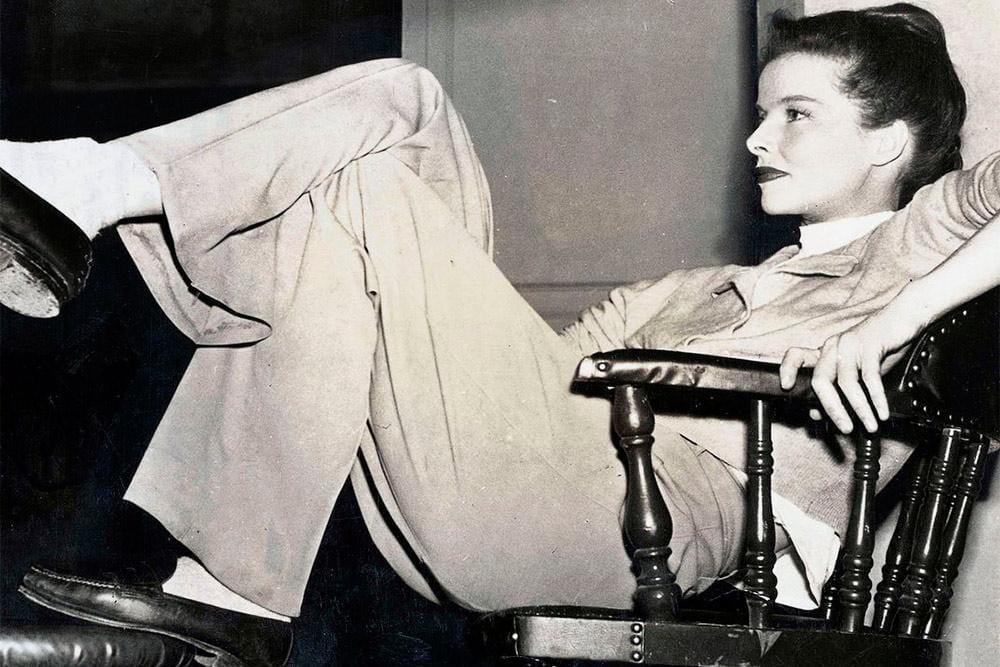
Katharine Hepburn, elegant in her loafers
There are shoes that are true to their time, symbolize their generation, or follow fleeting trends for a single season. And then there are shoes that resist the dictates of fashion and are worn tirelessly, without losing an ounce of their elegant and timeless style.
At JULES & JENN, we've chosen 5 essential pairs of shoes that are worth investing in , so as not to upset the planet or our desire to be well-shod, and for a long time. But do you know the story behind these iconic shoes that you may have in your wardrobe?
The ballerinas
Worn by both men and women (with or without heels) since the 16th century, these flat shoes inspired by the world of dance were christened "ballerinas" in 1932, when the Australian Jacob Bloch created a workshop to make dance shoes reworked "for the street".
In France, they had their moment of glory when actress Brigitte Bardot commissioned Rose Repetto to create an urban version of the ballet shoe, which she wore with style in 1956 in Roger Vadim's film "And God Created Woman." Madame Repetto had in fact developed the "sewn-in" technique to relieve the feet of her son Roland Petit, which consists of sewing the sole inside out before turning it inside out (a technique still used today for the artisanal manufacture of our charentaises !).

On the left, the magnificent Brigitte Bardot in Repetto ballet flats. On the right, the JULES & JENN version in gold leather.
Later, it was Audrey Hepburn and Chanel who finally put ballet flats on the feet of millions of women of all ages around the world. Their comfort, Parisian style, and rare elegance made them a sought-after piece season after season. So, shall we dance?
Espadrilles
Inspired by Egyptian or Andalusian sandals (depending on the version), “espadrilles” come from a type of plant that was burned and woven to make soles. But the most curious thing is that before becoming a fashion accessory, they were considered “the slippers of the poor” because they were worn by miners, peasants, soldiers (they were supposedly worn by the soldiers of the King of Aragon!) or fishermen of the Mediterranean.
In France, the espadrille is said to have originated in the 12th century in the Catalan Pyrenees, both on the French and Spanish sides. A few centuries later, in the 18th century, a true craft industry was established in the Southwest of France, with Béarn and the Basque Country becoming the strongholds of its artisanal production, thanks to local production of hemp (for the sole) and linen (for the canvas closing the shoe).

On the left, Grace Kelly in espadrilles. On the right, the JULES & JENN version in beige recycled cotton. © NANA PRODUCTIONS/SIPA
After the First World War, a rubber sole was added, which made them more suitable for leisure and appealed to the fashion world. In the 1960s, Yves Saint Laurent had the idea of an espadrille with a heel and ribbons and personalities from all sides began to adopt them for the holidays: it was a dazzling success and the variations multiplied. Today, JULES & JENN still manufacture them in Mauléon , in the pure Basque tradition and offer several colors for women and men . Long live the espadrille!
Leather loafers
Whether it triumphs or divides, the loafer (originally worn only by men) remains a key piece in the men's wardrobe. Even if its distant origins (a rustic Native American shoe) may seem anecdotal, it is often associated with the American shoemaker Georges Bass, who was inspired in the 1920s by Norwegian fishermen to create a comfortable leather shoe, which was a hit with students. They would adorn them with a 1 penny coin under the breastplate, the price of a phone call (hence the name "penny loafer"), creating the "Ivy League" trend with their wide pants.
Worn on weekends with golf pants in Europe or in a more formal way, like derbies in the 1940s, the versions follow one another and are not alike. It was in the 1950s that the famous tassel loafers worn by wealthy Americans were born. A little later, the Italian luxury brand Gucci created the horsebit loafer, whose bib was replaced by a horsebit. In the 1960s, this model was worn by many movie stars and all young people from good families sported it with a suit.

On the left, Alain Delon and Romy Schneider in loafers. On the right, the JULES & JENN version in suede.
In the 1990s, the spiked moccasin (very popular in Italy) was born, designed for driving comfortably without the foot slipping on the pedals...
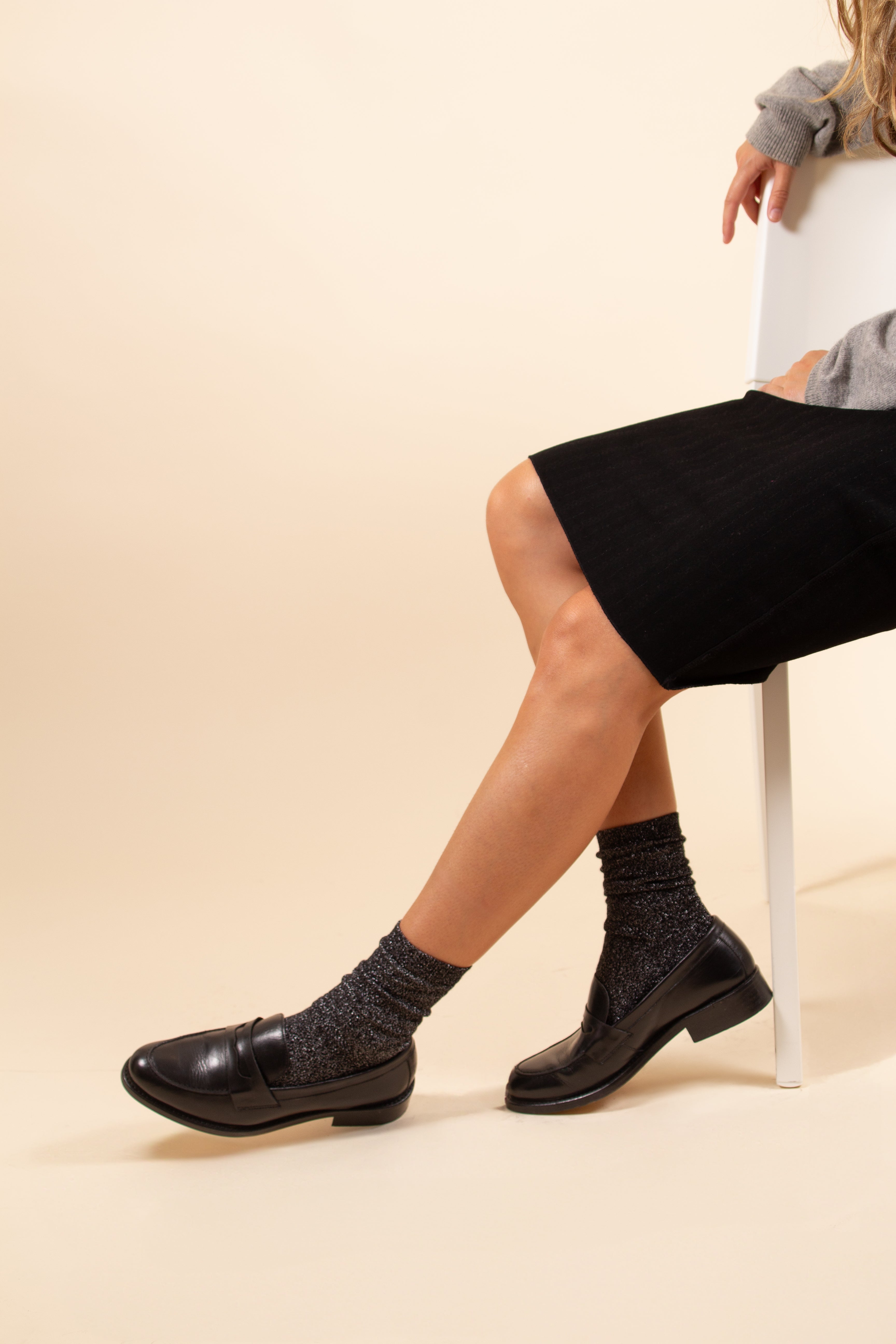
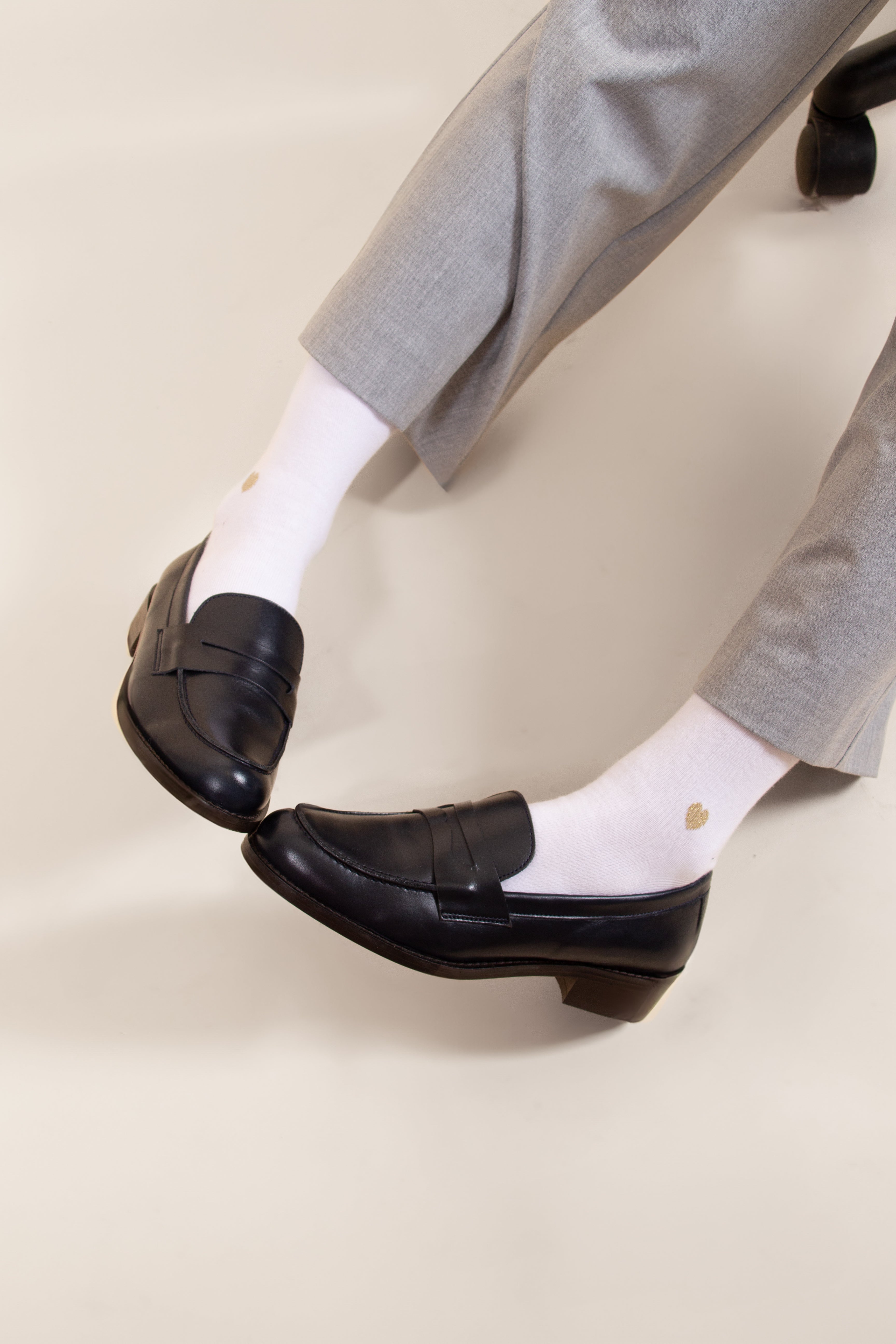
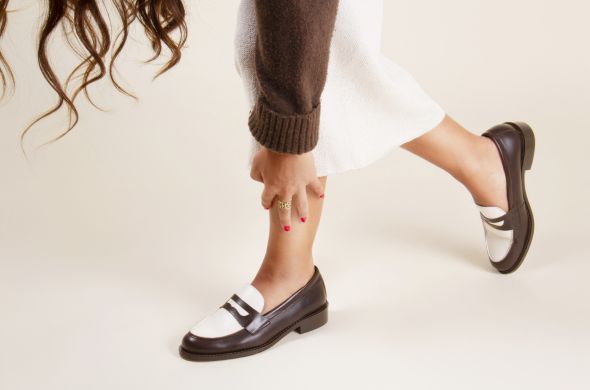
If today, loafers are still associated with a chic and dressy style for men , they are worn in a more casual way by women , who appreciate above all their comfort and flexibility.
Boat shoes
It was in 1935, while walking his dog "Prince", that Paul Sperry (born into a family of sailors in Connecticut) was struck by the ease with which his four-legged companion moved on icy ground... He was used to repeated slips on his sailboat, including one that almost cost him his life! He then imagined a shoe with a non-slip sole, thanks to deep grooves imitating the tiny grooves in his dog's paws. After numerous tests, he finalized his model designed to resist water (and not mark the deck of boats) and... bingo, he signed a contract with pleasure sailors and the US Navy in 1939, a huge commercial success.
It was then the wealthy social classes in Maine, Virginia, and the Hamptons who adopted it as a way to enjoy family boating. It grew in popularity in the 1960s, notably thanks to the Kennedy family, who were regularly photographed on vacation in the region.

On the left, the boat shoes worn by Errol Flynn. On the right, the version from JULES & JENN. © 2019 BJM
But it wasn't until the 1980s that they truly came to prominence, when they were featured in the influential guide "The Official Preppy Handbook." The shoe then became a vacation staple, emblematic of the American East Coast preppy style.
Their prestige then spread to Europe and was no longer just for sea trips. They were now worn mainly in town, on weekends, for a chic and relaxed look, and came in many colors , more or less classic.
The pumps
The ultimate symbol of femininity, the pump (from the Italian scarpino, “little shoe”) was originally worn… by men! It owes its origins to the butchers of Ancient Egypt who used it to avoid staining their feet with blood! In 16th-century Venice, “chopines,” wooden slippers topped with high platforms of 10 to 12 cm, were this time reserved for ladies to allow them to avoid dirtying their dress. In the 17th century, the raised shoe reappeared, this time adorned with lace, ribbons or other precious stones and seduced the nobles and bourgeois – men and women – at the Court of Versailles, with the aim of standing out and “not getting dirty in the street.”
It wasn't until the 1920s that pumps became primarily women's shoes. Considered a symbol of emancipation, they were almost exclusively worn for evening wear. They gained a new height in 1950: thanks to Charles Jourdan and Roger Vivier (who both worked at Dior), the stiletto heel was born!

On the left, Roger Vivier pumps on the cover of issue 409 of ELLE. On the right, JULES & JENN pumps. © ELLE Magazine
Many designers then declined it endlessly, like Christian Louboutin, who, finding the shoes too black, decided in 1991 to paint the sole with red varnish! The biggest international stars were snapping it up.
Today, the little heel has come a long way to become a timeless and essential fashion accessory. One study says that French women certainly love pumps , but 76% of them admit to having a pair of ballet flats when they wear pumps!
So, do you have one of these iconic pairs in your closet? If so, now you know their story!