



The shoemaking workshop, France (Nantes)
This Nantes-based company was founded in 1890. At that time, its founder was a clog maker who traveled the roads of the Mauges region, stopping from farm to farm to provide entire families with his indispensable wooden clogs. More than a century later, the business became more established with the opening of a workshop in the Cholet region. Today, the founder's great-grandson is at the helm of this unique expertise and is currently passing this heritage on to his two thirty-something children. This workshop is now one of the last workshops in France specializing in the manufacture of clogs and shoes using wooden soles.
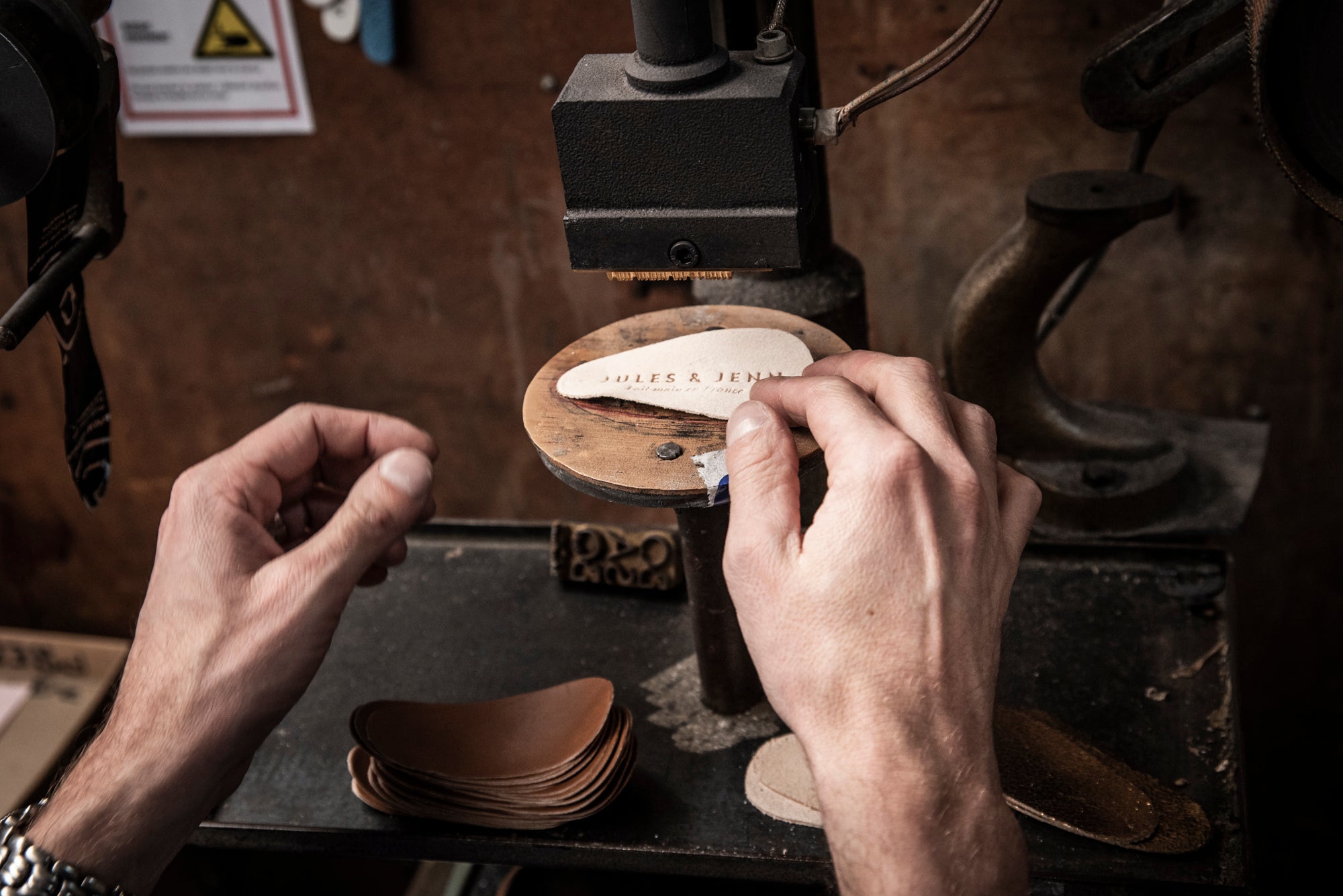
{"type":"root","children":[{"type":"text","value":"The workshop and JULES & JENN"}]}
The workshop has remained faithful to its early heritage and has preserved traditional, artisanal manufacturing techniques, while continually evolving its products to keep up with fashion trends.
In 2018, the workshop received the prestigious EPV “Living Heritage Company” label for the excellence of its know-how.
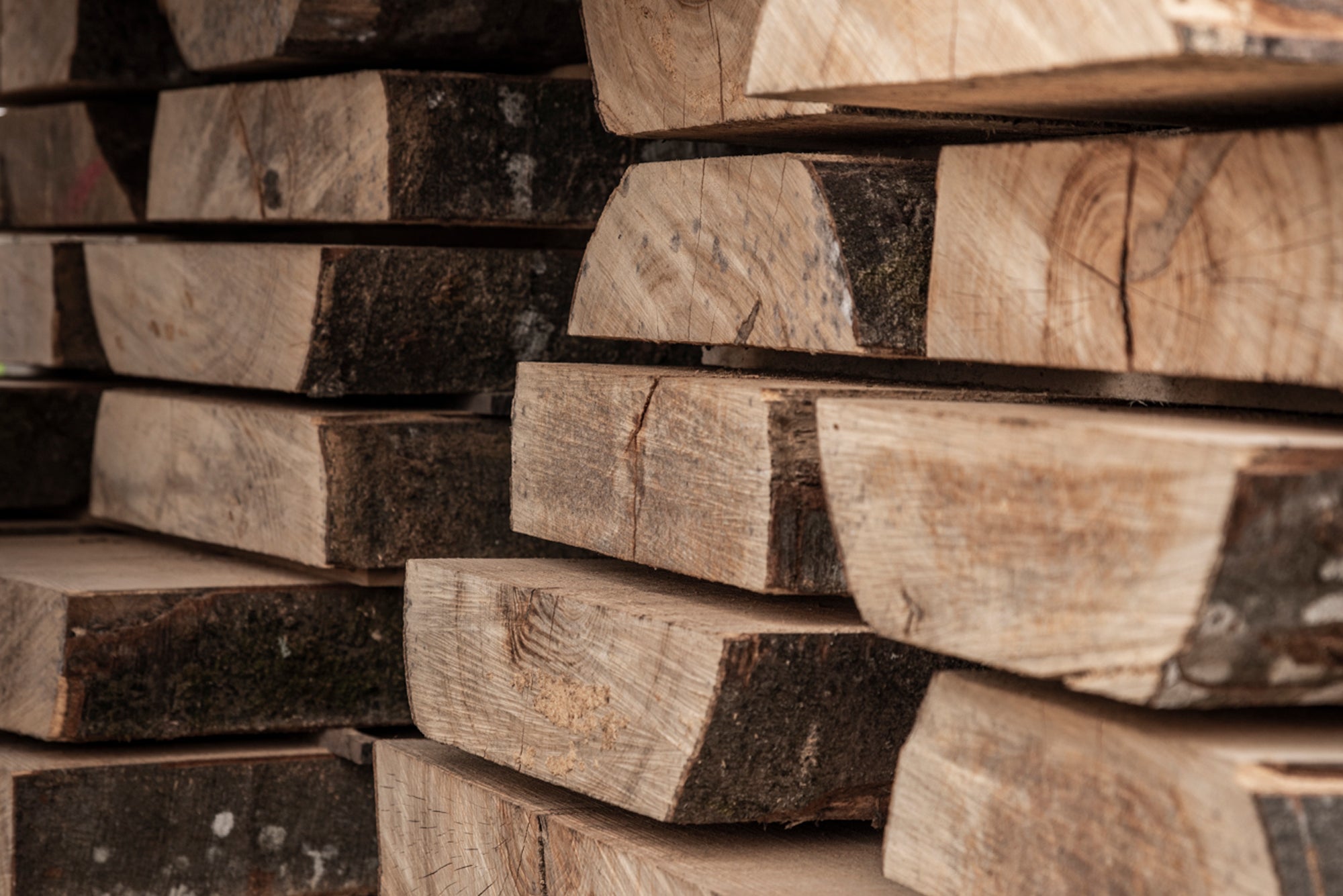
For over a century, the team has been committed to working with noble and natural materials. Respect for the environment is at the heart of its concerns. Thus, the wood used to manufacture the soles comes directly from the national forests of the Pays de la Loire region. All wood waste is also recycled to fuel the boiler used to heat the workshop and dry the soles. Similarly, the rubber used on the soles is phthalate-free so it is fully recyclable at the end of its life. It also comes from a factory located about fifty kilometers from the workshop. To reduce the energy impact of transport, the leathers come from French and European leatherworks in neighboring countries. Finally, each skilled worker independently carries out all the operations related to shoe manufacturing. This organization allows for a diversified work environment and limits repetitive movements.
It is these strong ecological and ethical commitments that particularly touched us and made us want to collaborate.

Shoe making
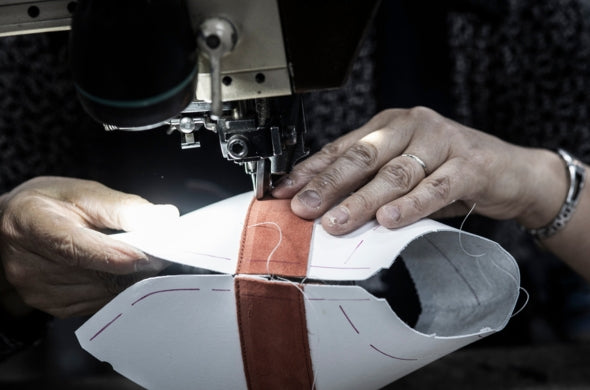
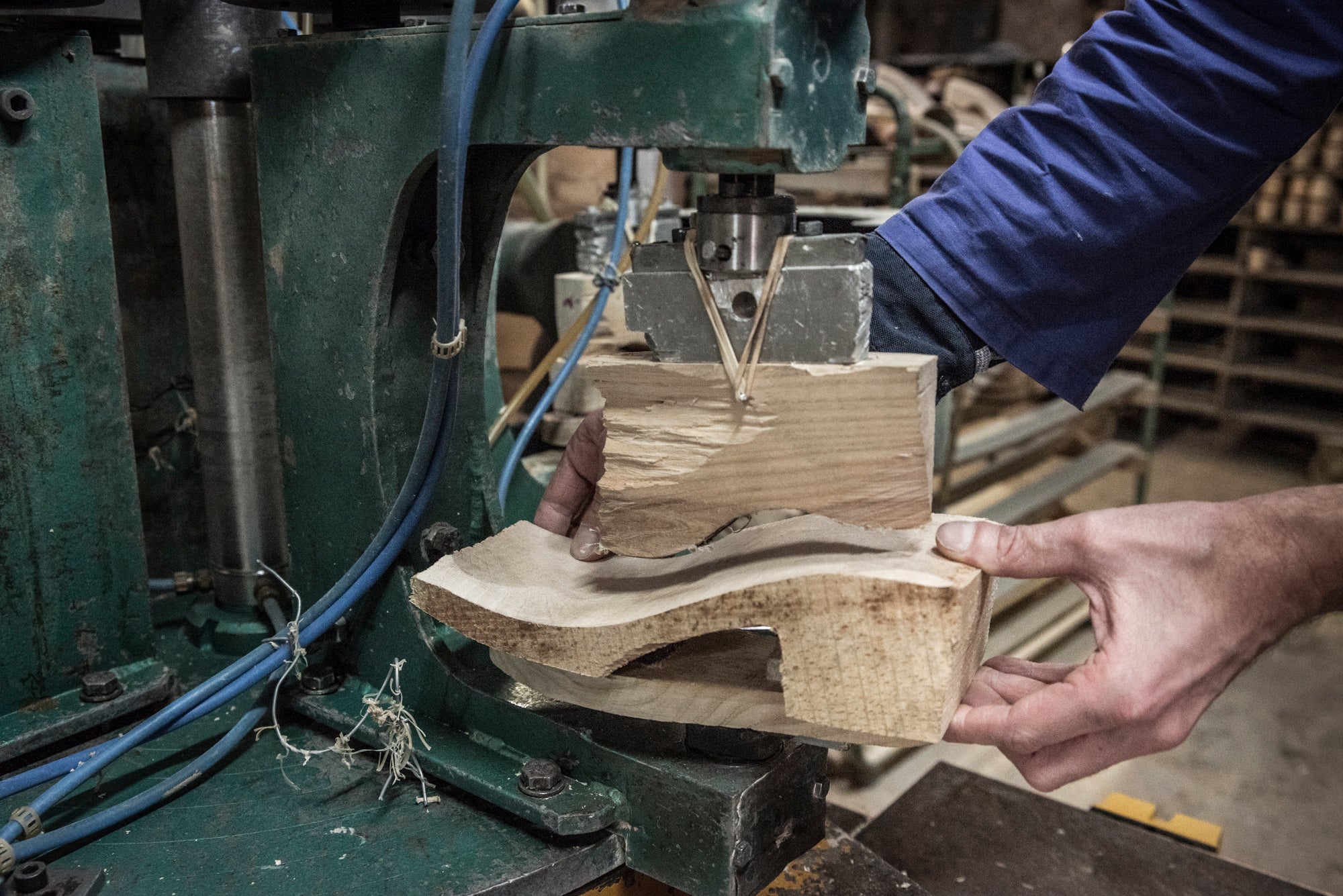
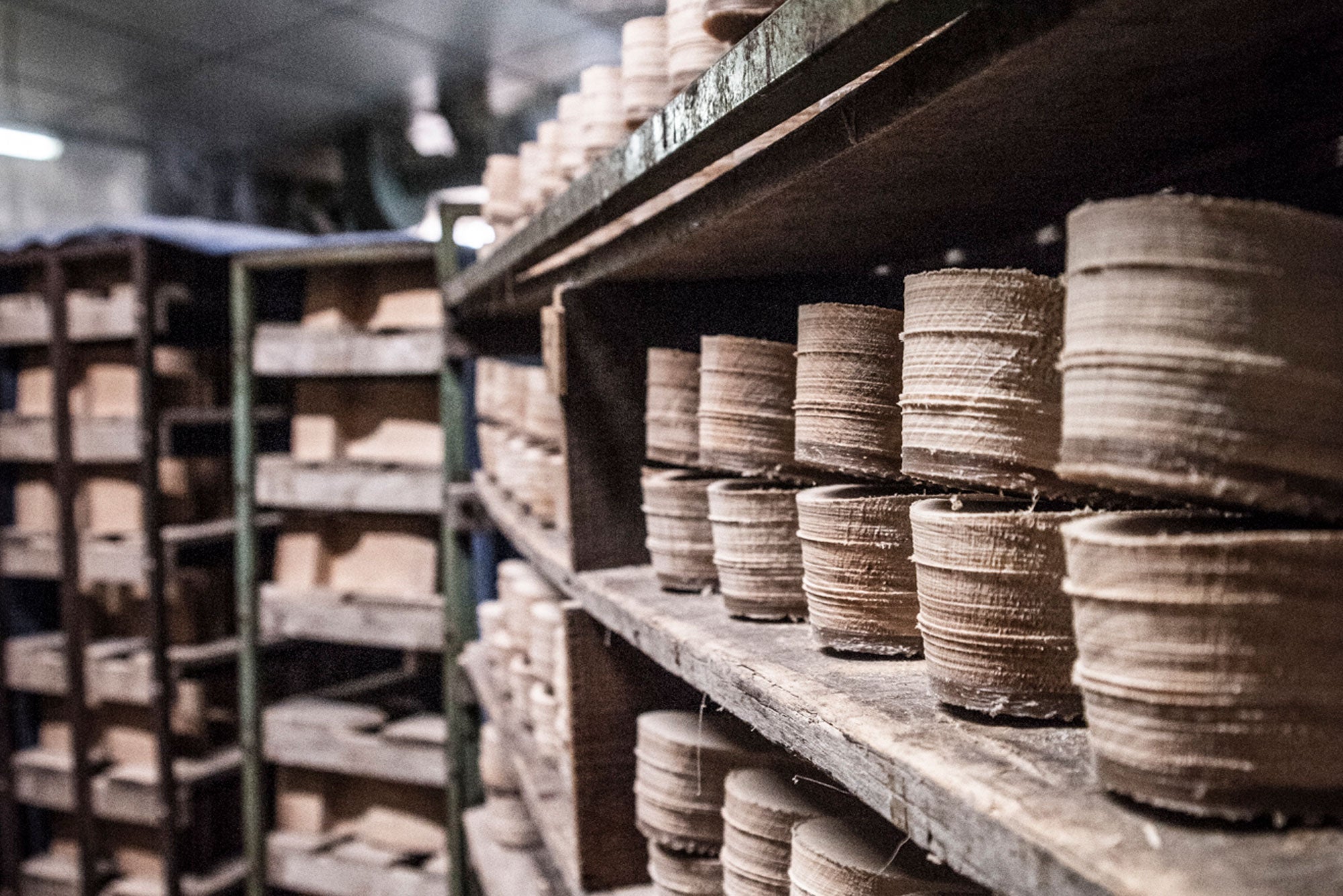
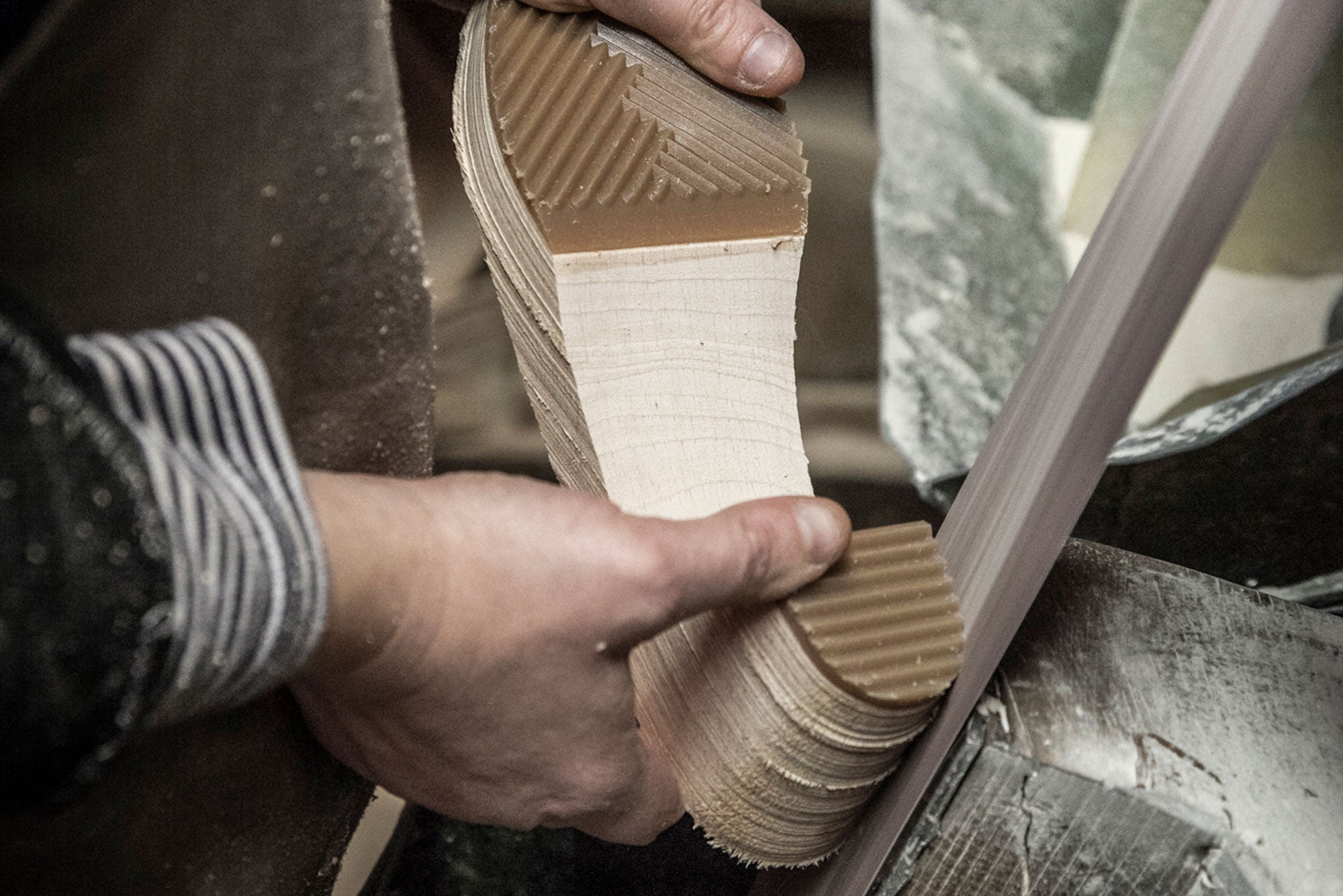
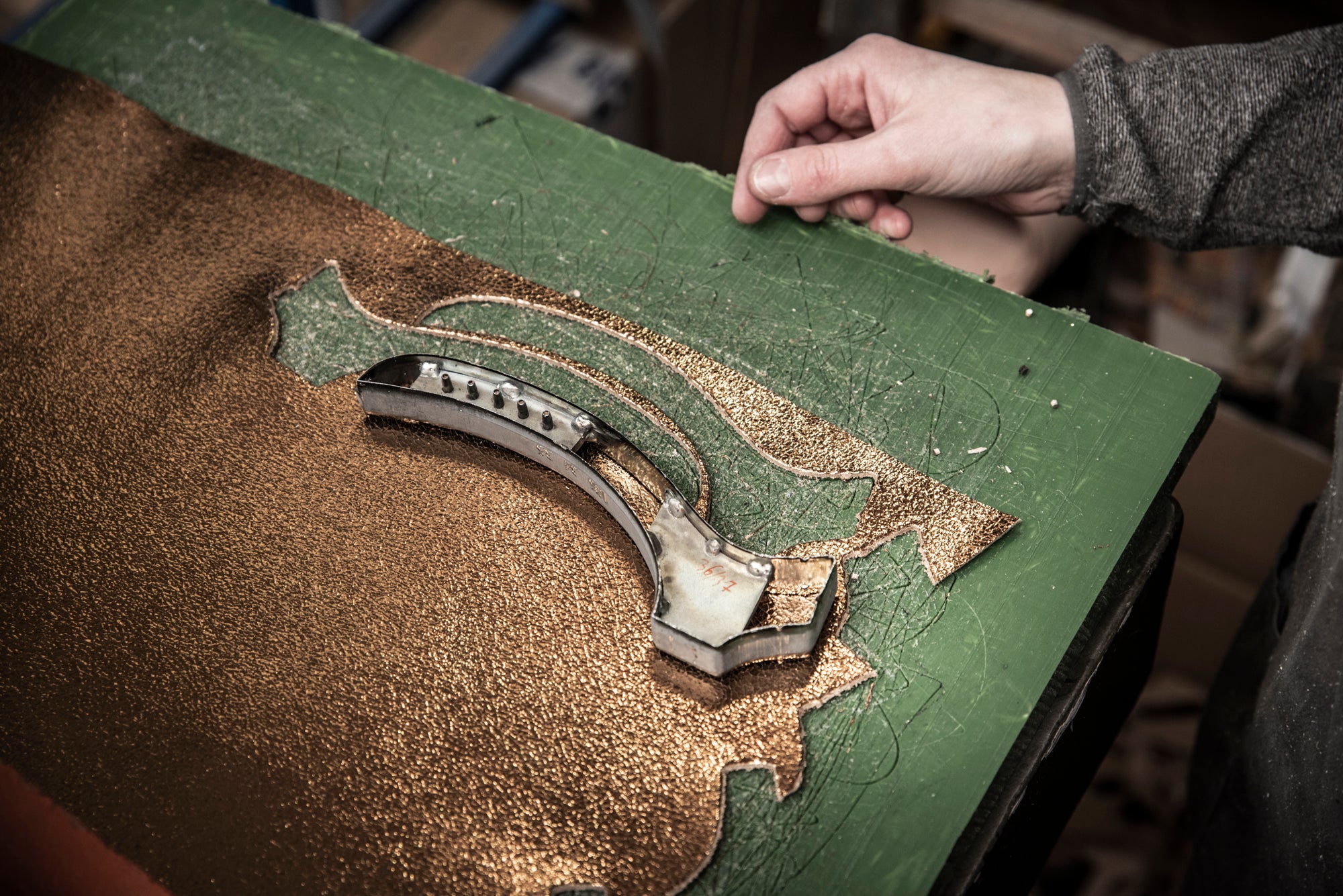
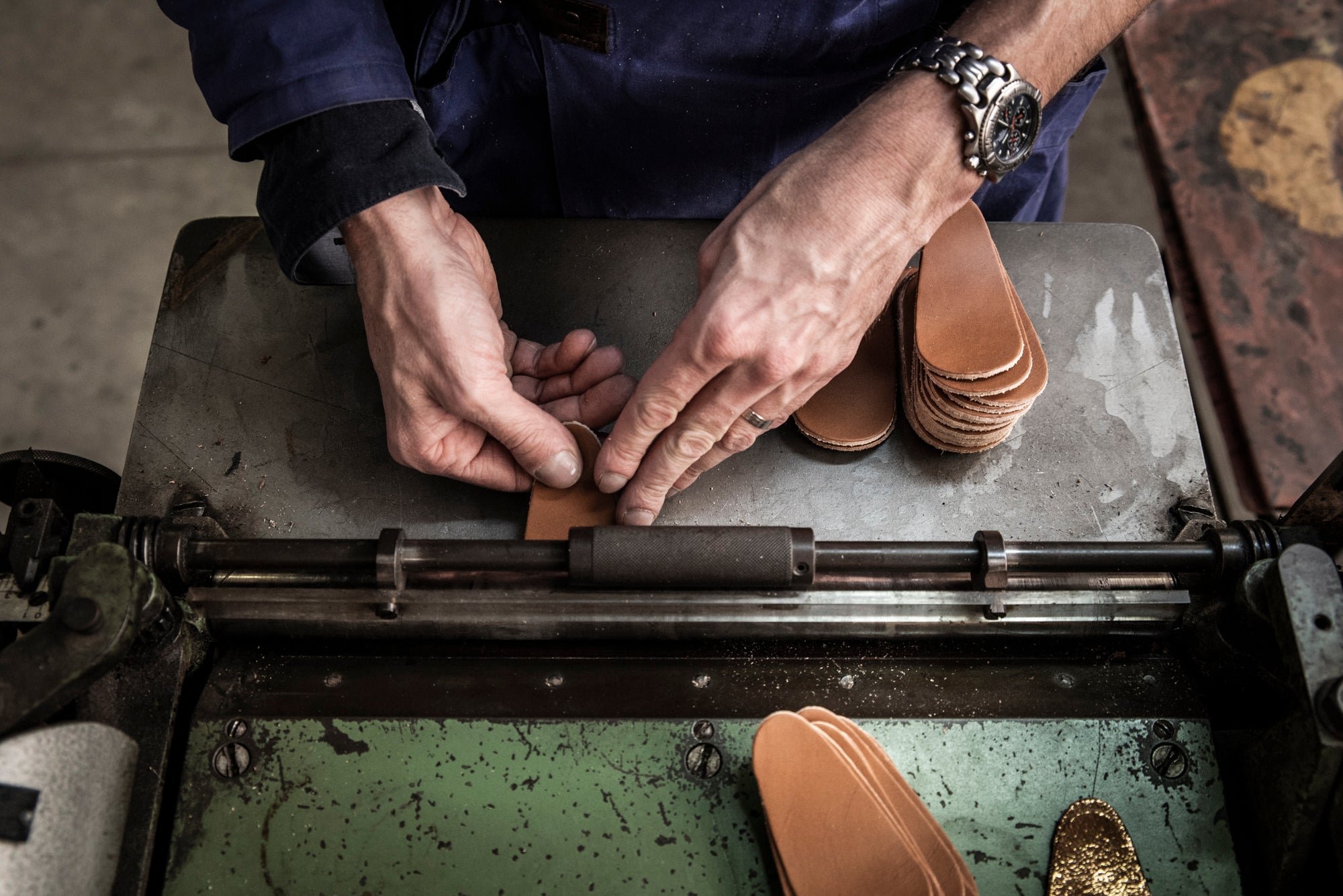
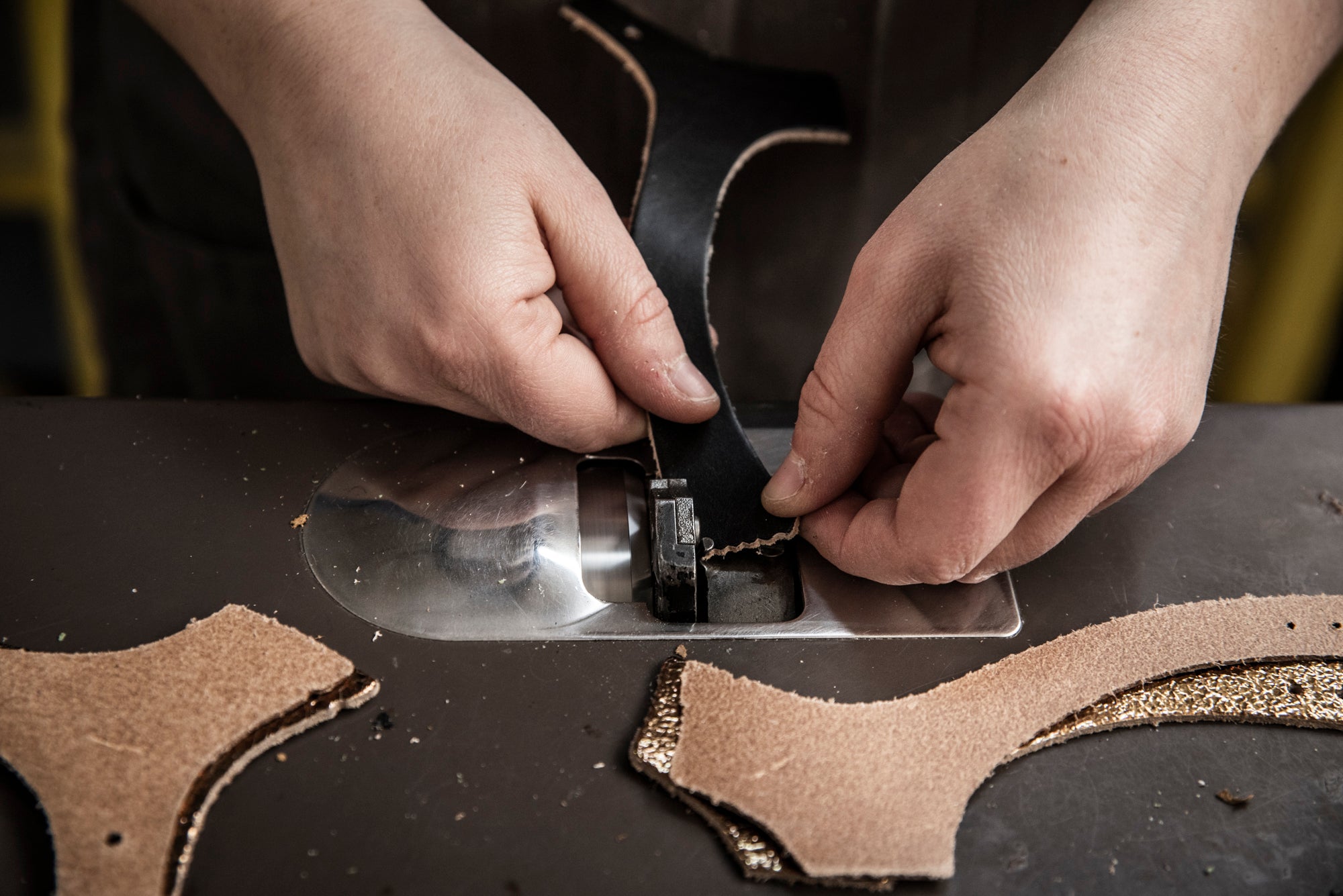
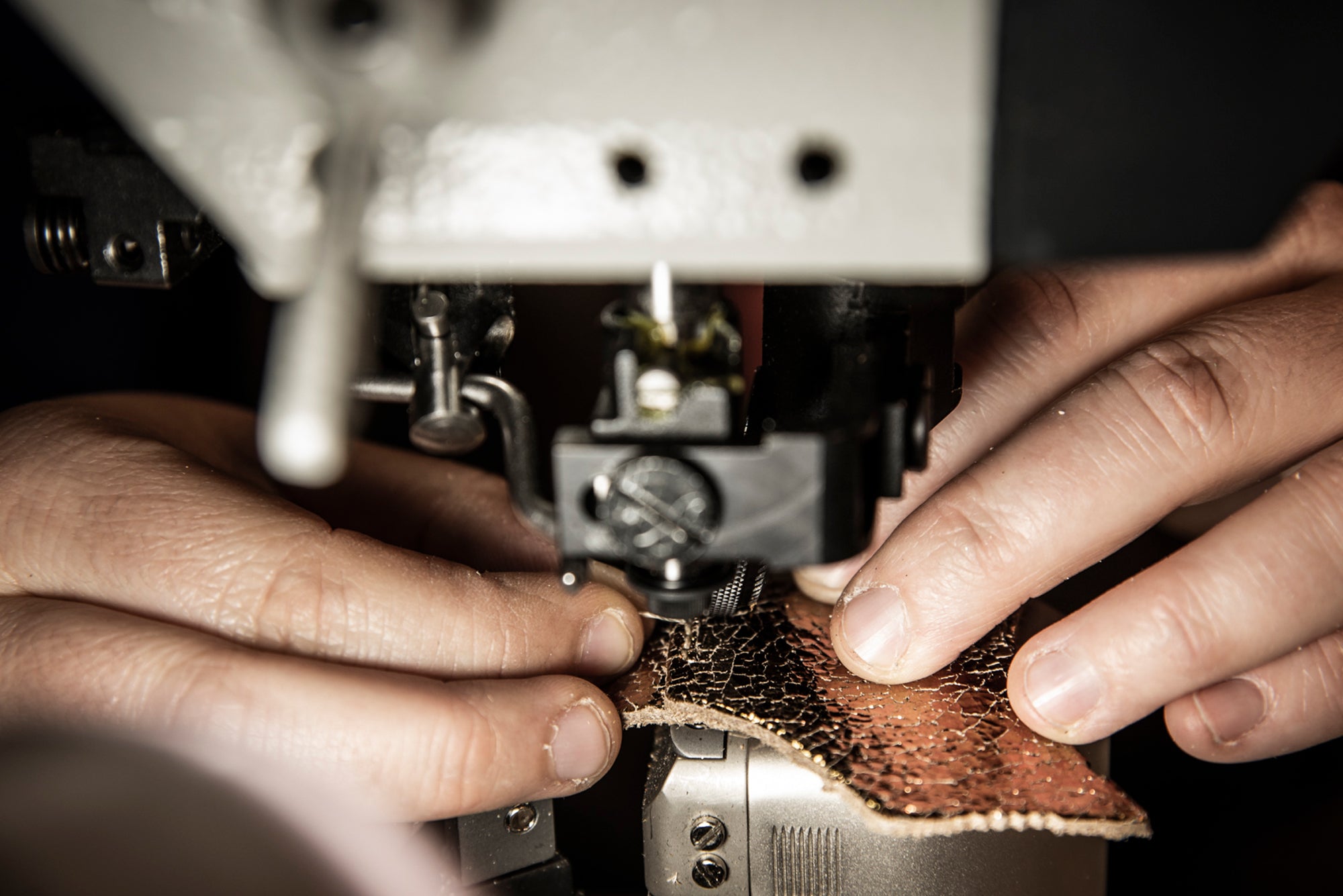
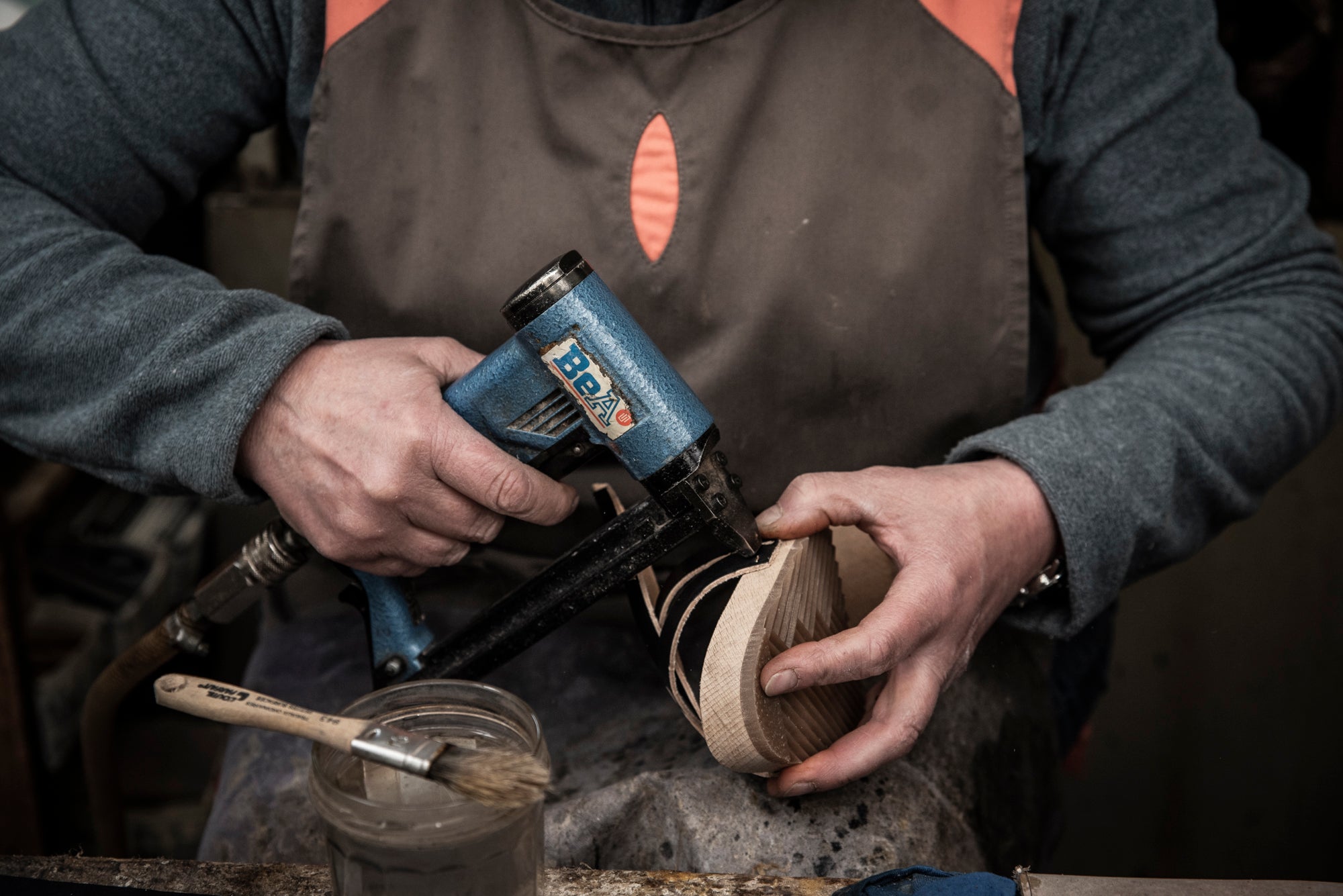
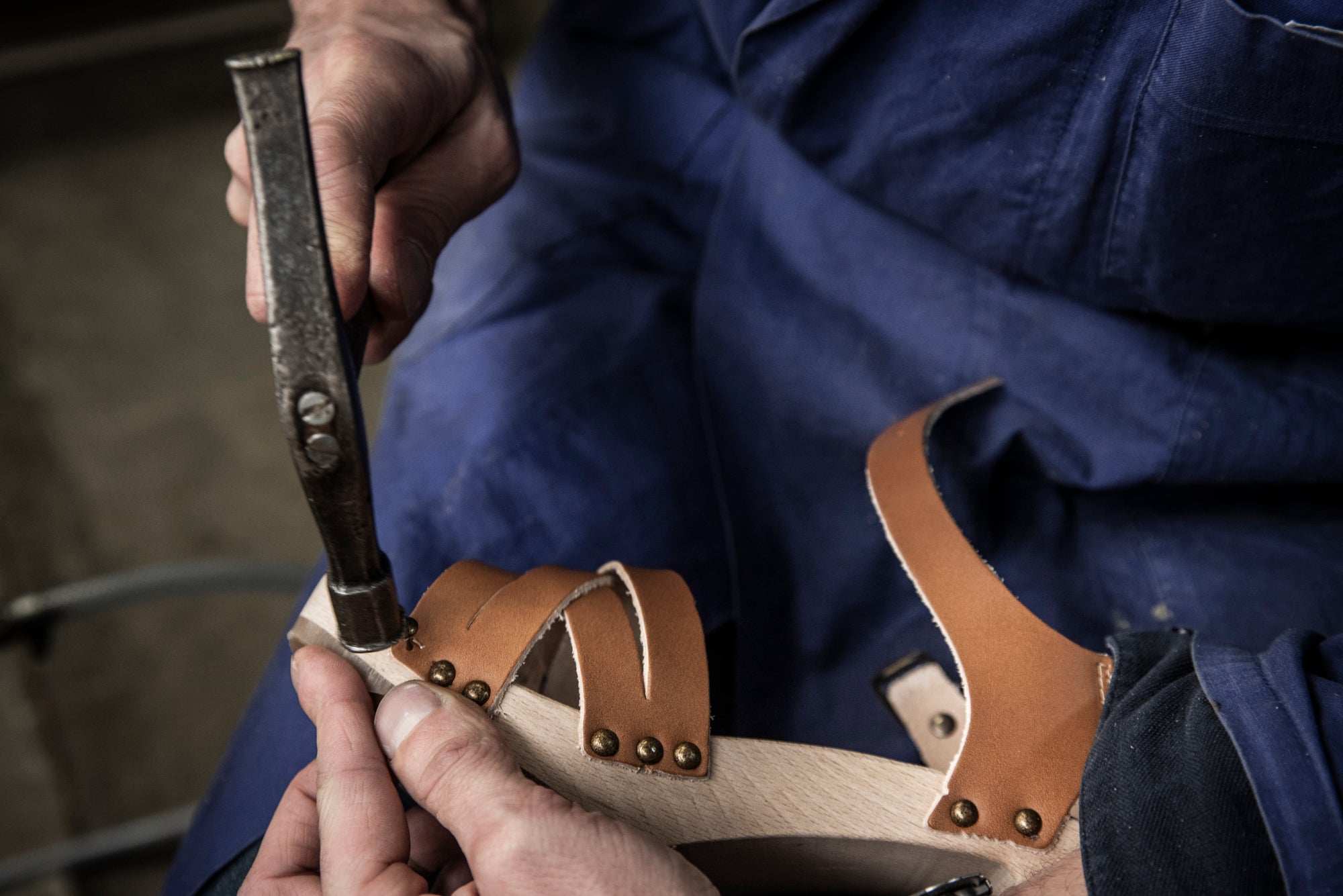
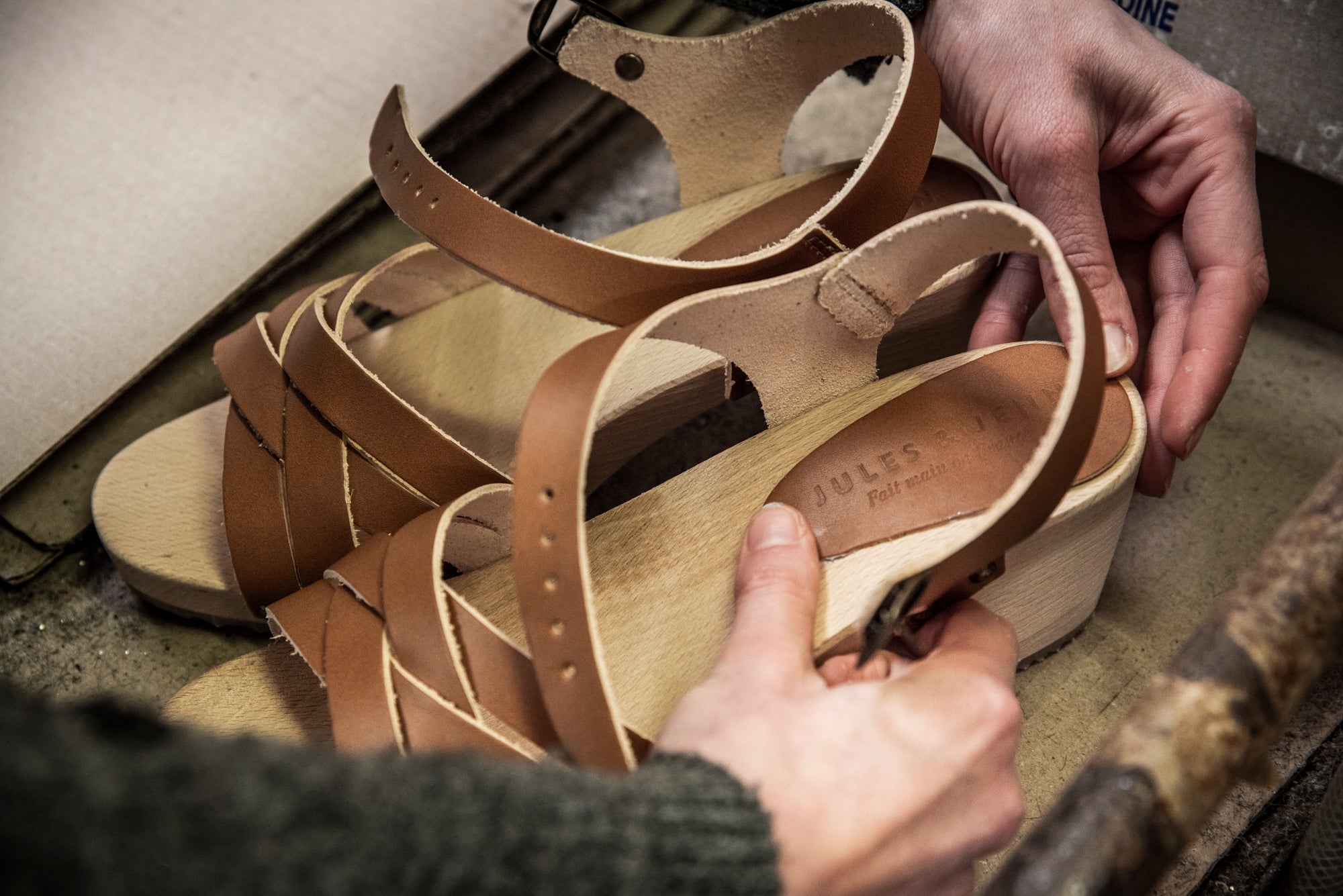
Based on the drawing, the pattern maker creates the pattern for the various parts that will make up the shoe. Using punches, the cutter cuts out, manually or with a press, the different parts of the model from the chosen material. The pieces making up the upper—the top of the shoe—must be carefully cut to avoid natural defects in the leather. These pieces are then sewn together to form the upper, which is then placed on a mold, varying according to the size, to be attached to the inner sole. Depending on the model, the sewing, gluing, sanding, and drying operations follow one another. At the same time, the wooden sole is made on-site in the workshop. To do this, the cutter shapes the sole from blocks of beech wood. It is then sanded to remove excess material. Finally, the outer sole is attached by sewing and gluing. Decorative rivets are finally added manually. After a drying time, the shoe assembly is complete. The mold is then removed from the shoe. Finally, the shoe is pampered to ensure an impeccable finish. Wrapped in tissue paper, the shoe is delicately placed in its JULES & JENN box. All that's left is to slip your feet inside.
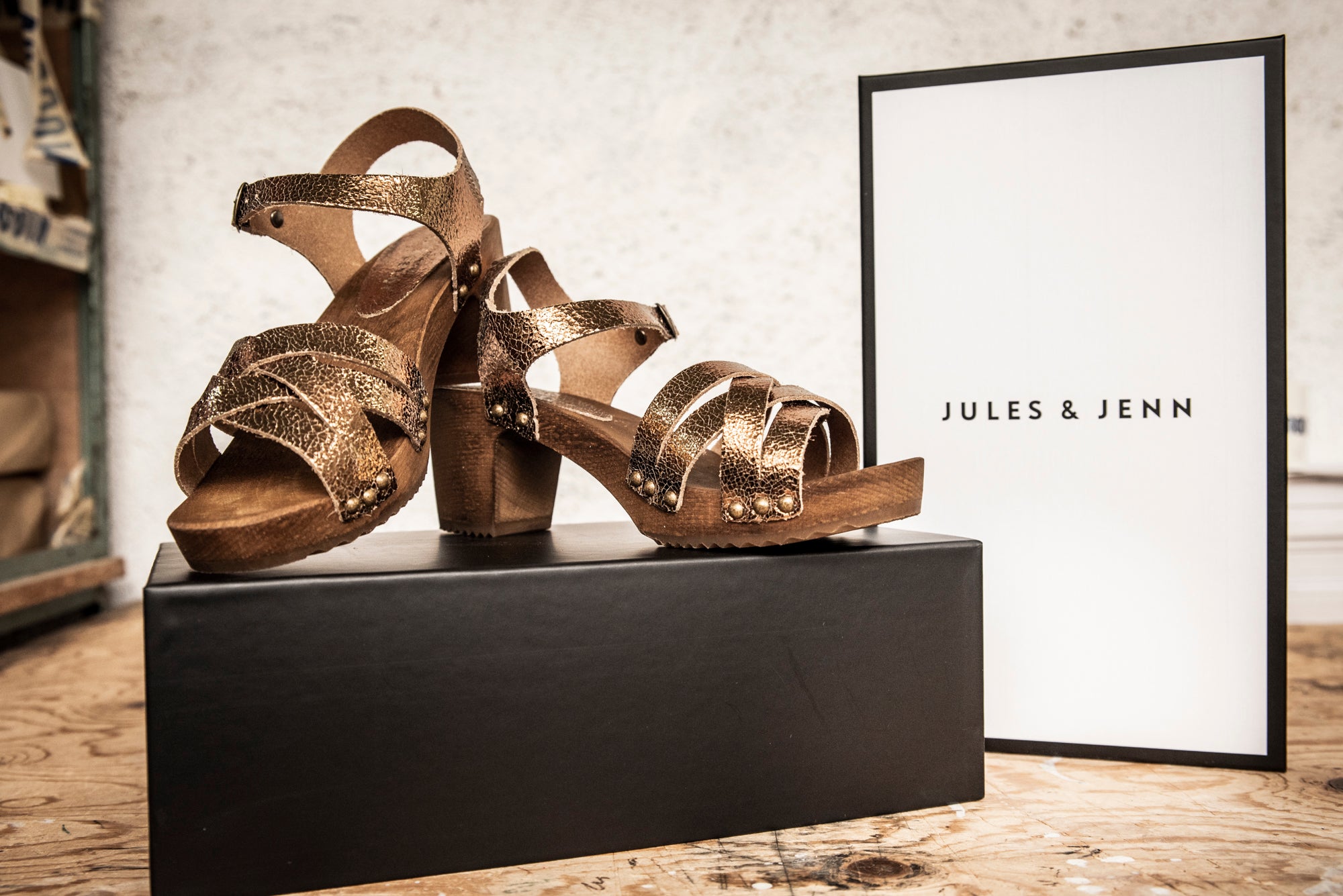
Photos © Karoll Petit
At a collection point from €25
Available in 3X, 4X
100 days to try
Email, phone