
Responsible fashion: why labels?

Today in France, there is still no single, recognized official certification for ethical fashion. Add to that the fact that the clothing and footwear sector remains largely unregulated and even less transparent. The result? As a consumer, it can be very difficult to navigate when all the brands claim to be "responsible" or "green"! This is why labels and other certifications play an essential role, guaranteeing that the items you buy are made according to rigorous standards of sustainability and responsibility. However, there are many of them, attesting to diverse commitments, and not all are equal. It's important to differentiate between labels established by independent organizations and those created by companies that award themselves their own medals! Here are 5 environmental and social labels validated by accredited independent third-party organizations, which we feel are important to highlight.

No. 1: OFG – Guaranteed French Origin
The Origine France Garantie certification attests to the "real" French origin of products, as opposed to the sometimes misleading "made in France" label, which is used indiscriminately. It guarantees the French manufacture of a product by proving that the essential stages of its manufacturing are carried out in France and that more than half of the product's added value is created on national territory. This label plays an important role in promoting local production and employment in France, while guaranteeing consumers the authenticity, traceability, and quality of the products they purchase.
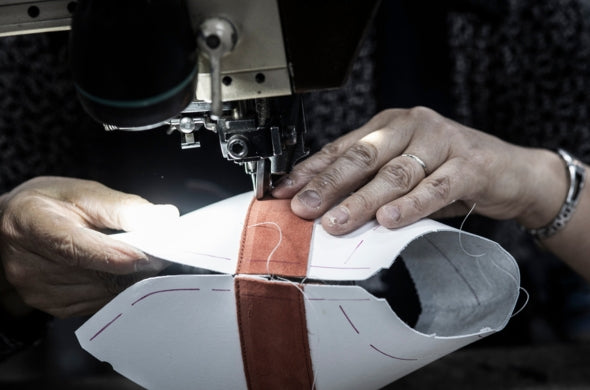
At JULES & JENN, our OFG-certified products have been made by expert hands in a small French workshop.

No. 2: LWG – Leather Working Group
The Leather Working Group is an international organization of leather experts that evaluates and certifies sustainable practices in the industry. Tanneries can earn LWG certification by demonstrating their commitment to reducing the environmental impact of their production, including traceability, water consumption, greenhouse gas emissions, waste management, and the reduction of controversial substances.
At JULES & JENN, choosing responsible leather means sourcing as much as possible from Leather Working Group-certified suppliers. This guarantees that tanneries are part of a more sustainable movement. Currently, 59% of our leather products are LWG-certified, including 47% LWG Gold certification (the most demanding level), and our goal is to reach 100% by 2028.

Photo credit: © GOTS
No. 3: GOTS – Global Organic Textile Standard
The GOTS label is an international certification for organic textiles created in 2002. It ensures that the labeled fabric has been produced with a minimum of 95% certified organic fibers under dignified working conditions. This label covers aspects such as the cultivation of raw materials, dyeing, manufacturing, and labeling.
At JULES & JENN, all the pouches that hold our belts, small leather goods, and espadrilles are GOTS certified.

No. 4: Masters of Linen
Masters of Linen® is a certification that guarantees the production of high-quality, traceable, ecological, and 100% European linen, from the linen fiber (cultivation and processing of the material) to the creation of the fabric or garment. It is therefore a label based on three pillars: quality, geographical origin, and ecological value.
At JULES & JENN, the linen selected for our linen basket comes exclusively from the North of France and Normandy and is recognized as “Masters Of Linen”. This product has therefore benefited from exceptional and centuries-old European skills and knowledge, guaranteeing flawless quality.

No. 5: EPV – Living Heritage Company
Living Heritage Company is an official French label, created in 2005, issued under the authority of the Ministry of Economy and Finance, to recognize French companies with artisanal and industrial expertise deemed to be of excellence. It rewards traditional skills, traditional know-how, but also a continued commitment to quality and innovation. This label helps promote and, above all, preserve France's cultural heritage and artisanal skills, which are often undermined by foreign competition.
At JULES & JENN, several of our French partner workshops hold this prestigious label, such as the one that makes our wood and cork shoes near Nantes, the one that knits our soft socks near Lyon, or the one that shapes our small leather goods in the Tarn region. Finally, the workshop that makes our made-in-France sneakers in Cholet also recently received this label, a workshop that already held the Produit en Anjou label, to highlight their local roots!
And you, do you pay attention to certifications in the fashion industry? Which labels do you look for when making your purchases? Don't hesitate to share them with us in the comments!