On the road to eco-design

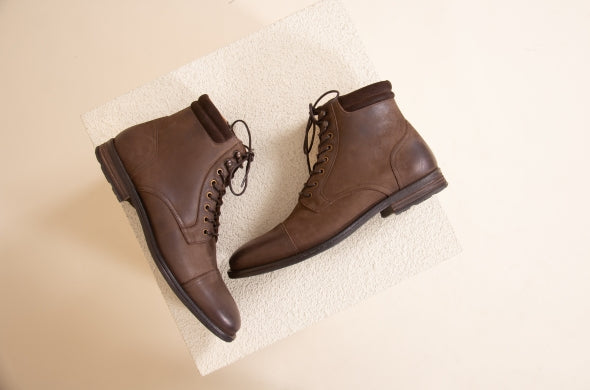
Driven by a strong desire to create more sustainable fashion, at JULES & JENN, we have always made sure to prioritize the use of ethical raw materials. This is why we began by working with the most sustainable material available today for shoes: leather. Aware of the potential hazards of leather, we strive to track its origin and processing to ensure that all the leather we use respects people and the environment. Indeed, we are part of an " eco-design " approach, which refers to all the production methods that reduce the environmental impact of a product or service throughout its life cycle.
Alongside leather, and in a general trend towards less meat consumption, we have chosen to develop items using recycled and upcycled materials, while keeping in mind our imperatives of comfort and sustainability. This season, we are further intensifying the exploration of new alternative materials, even more eco-friendly.
Indeed, after carrying out our first carbon assessment in 2021, which allowed us to assess the carbon footprint of our activities over an entire year, we identified concrete areas for improvement for our company. While our carbon footprint in 2020 amounted to 1,093 tonnes of CO2e (72% of which came from our raw materials), we also discovered that our good practices, such as upcycling, recycling, and the sustainability of our products, had helped avoid emissions of 491 tonnes of CO2e! Determined to continue on this path, we invested in research to find, in partnership with our European partner workshops, ever more innovative and environmentally friendly materials. Let's discover them!

Wood and cork
When we think of natural and traditional materials, wood often comes to mind. It's a highly durable insulator that's ideal for making furniture, but also... durable, environmentally friendly shoes.
At JULES & JENN, wood has a special place in our spring collection which cultivates the country spirit with our clogs and wooden heel sandals , shoes as trendy as they are responsible. Even the rubber sole is phthalate-free so it is recyclable from A to Z! But our approach is not only limited to the choice of these noble materials, we have also ensured that wood waste is not thrown away but rather recovered and recycled in the supply of the boiler for heating the workshop, and drying the soles.
Also coming from the tree but this time from the bark, we find cork , recently become a reference among the various so-called plant materials, because it is renowned for its resistance and protection against cold and humidity. Containing a substance called "suberin", cork ensures good waterproofing but also a light, soft and easy-care finish. So this season we have bet on this fantastic material by imagining mules whose sole is made of cork chips (allowing infallible waterproofing) and phthalate-free rubber to be fully recyclable. We told you 100% eco-responsible, right?

Corn and apple fiber
In full swing, multiple alternatives, more or less natural, derived from the agri-food industry have recently emerged, leading to the manufacture of 100% vegan products. This season, we chose the two materials that contained the highest proportion of natural products.
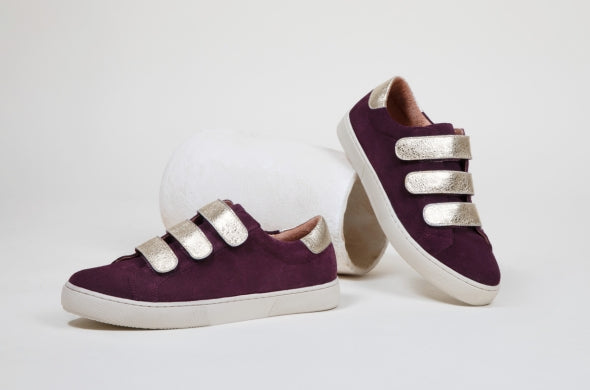
This is particularly the case with corn , a plant with strong and flexible natural fibers that also happens to be a renewable resource that uses relatively little water. We therefore decided to explore this material by offering a 100% vegan sneaker made from corn fiber made in Italy. Indeed, our essential Velcro sneaker is getting a makeover this spring to display a brand new version made from 43% biopolyols sourced from non-food European corn and wheat crops, and without GMOs. The trompe l'oeil effect is total since even the lining and the insole are made from imitation leather microfiber!
Just like corn fiber, apple fiber is also part of the line of innovative, flexible, and resistant materials. This unique fiber was created to address the end-of-life issue of apple waste: it is made from recovered apple pulp and waste, dried, then ground into a fine powder and mixed with pigments and a binder. This very promising alternative material also received the prestigious Green Carpet Fashion Award in Milan in 2018, a prize rewarding eco-responsible initiatives for more sustainable fashion. Used for the first time at JULES & JENN for our bandeau heel mules made in Portugal, it's still making waves!

Flax and hemp
What if we talked a little more about linen ? This 100% natural material that we introduced to you last year continues to amaze us with its many virtues: it doesn't require irrigation or pesticides, doesn't damage the soil and is grown locally... It's ultimately THE summery, casual and environmentally friendly material that we can't live without! At JULES & JENN, it's used for our women's sneakers made from linen canvas made in the North of France, a 70% recycled rubber sole and embroidered eyelets without metal parts to make it as recyclable as possible.
Finally, hemp also stands out as an ecological fiber par excellence. Just like linen, it is a natural resource that does not consume irrigation water, chemical inputs or pesticides. But it also has important robust qualities: its canvas is twice as resistant as a cotton canvas! For all these reasons as well as its historical anchoring in the tradition of French footwear, we have chosen, in co-creation with our customers, to make our future denim espadrille from hemp canvas woven in France, in the Lot! From our collaboration with the jeans brand Atelier Tuffery will be born an espadrille that is at once comfortable, eco-friendly and local, who can say better?
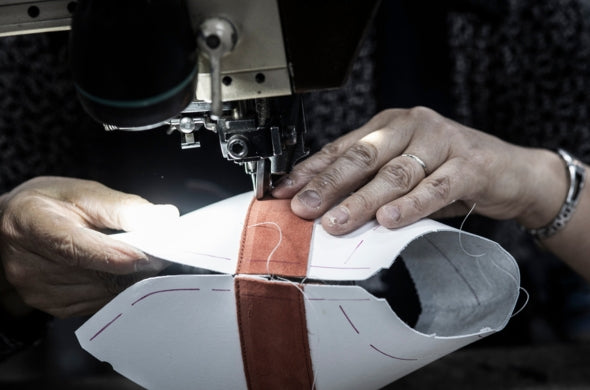
But this eco-designed collection, made close to home, is just the beginning of a long-term strategy that will enable us to achieve our goal of reducing our total carbon footprint by 30% by 2024. A big thank you to our partner workshops with whom we have learned hand in hand to develop shoes in tune with the times, halfway between traditional know-how and industrial prowess. Now it's up to you to proudly wear your convictions!